The material is available only to
POZIRK+Łukašenka between war and warnings: Kyiv tightens the squeeze
The material is available only to
POZIRK+
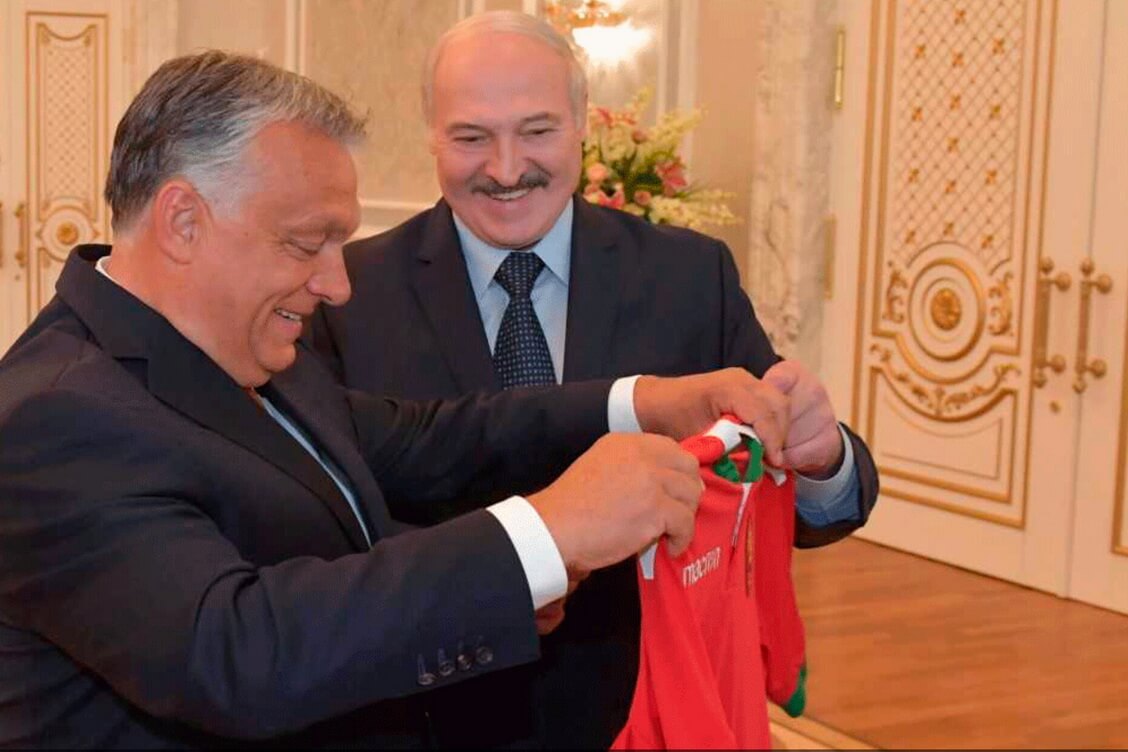
Alaksandar Łukašenka has congratulated Péter Magyar of Hungary’s Tisza Party on his victory in the 2026 Hungarian parliamentary election. However, he can hardly be pleased by Viktor Orbán’s defeat after 16 years in power. Hungary may now align its policy toward Belarus more closely with that of the European Union.
Under Orbán, Budapest maintained contacts with Minsk, defying Brussels’ decision to limit high-level engagement.
“We don’t like sanctions,” Hungarian Foreign Minister Péter Szijjártó said during his visit to Minsk in October 2024.
He traveled to Belarus at least four times after the Łukašenka regime facilitated Russia’s attack on Ukraine in 2022. Szijjártó has been accused of sharing EU classified documents with Moscow and may face legal action.
Orbán visited Belarus in June 2020 during the COVID-19 pandemic, but neither he nor Łukašenka wore face masks.
The Belarusian ruler suggested that Belarus should double its annual trade with Hungary to €500 million. In 2023, however, bilateral trade fell to $138.8 million, according to TradeMap.
Łukašenka told Szijjártó in October 2023 that trade was decreasing “not through our fault.” “You know the reason,” he added, referring to EU sanctions.
Hungary failed to persuade the EU to ease its sanctions against Belarus. Orbán’s policy was primarily aimed at securing EU funding for Hungary in exchange for his support for EU sanctions. Notably, Belarus listed Hungary among “unfriendly countries.”
Minsk derived propaganda benefits from its public contacts with Hungarian officials. In September 2023, Hungarian Ambassador Zita Ilona Bencsik presented her credentials to Łukašenka.
Hungary was the first EU country to do so after the 2020 presidential election, which was marred by allegations of vote rigging.
Minsk made the most of Hungary’s diplomatic move, pointing out that not all countries in Europe supported sanctions.
“The visit by the minister of foreign affairs and external trade of Hungary to Belarus once again demonstrates that there are forces—and, most importantly, leaders in Europe—who objectively assess the situation,” said Belarusian Foreign Minister Maksim Ryžankoŭ in September last year.
Minsk is looking for partners in Europe to help negotiate significant sanctions relief. The United States’ decision to lift 80 percent of sanctions in exchange for the release of hundreds of political prisoners is clearly not enough.
Belarus’ national airline Biełavia still cannot operate flights to Europe, while Biełaruskalij is not allowed to export its fertilizers through the Lithuanian port of Klaipėda. Trade between Belarus and the EU declined sharply after the 2020 crackdown on peaceful protests and the 2022 Russian invasion of Ukraine.
Łukašenka is eager to unfreeze relations with Europe and has asked his US negotiators for assistance.
John Coale, the US special envoy for Belarus, has already stated publicly that he would like Lithuania to allow Belarusian potash transit.
Through his diplomats, Łukašenka is attempting to identify weak links in Europe. Minsk had hoped for support from Orbán, Slovak Prime Minister Robert Fico (Slovak Ambassador Jozef Migaš returned to Minsk last year), and possibly Czechia’s Andrej Babiš.
Orbán’s defeat is a major setback in that effort.
Commentators expect that Hungary’s new government will approve the EU’s €90 billion aid package for Ukraine, which had also been blocked by Bratislava. Péter Magyar has promised better relations with the EU.
If Ukraine receives the aid, it will be better equipped to strike its occupiers. Consequently, the Kremlin would have fewer resources to support its Belarusian ally. This would not be good news for Łukašenka.
Orbán’s defeat is also a psychological blow to the Belarusian strongman. He has lost several other allies this year, including Nicolás Maduro and Ali Khamenei.