Łukašenka says he won’t protect EU from migrants with sanctions “noose” on Belarusians’ neck
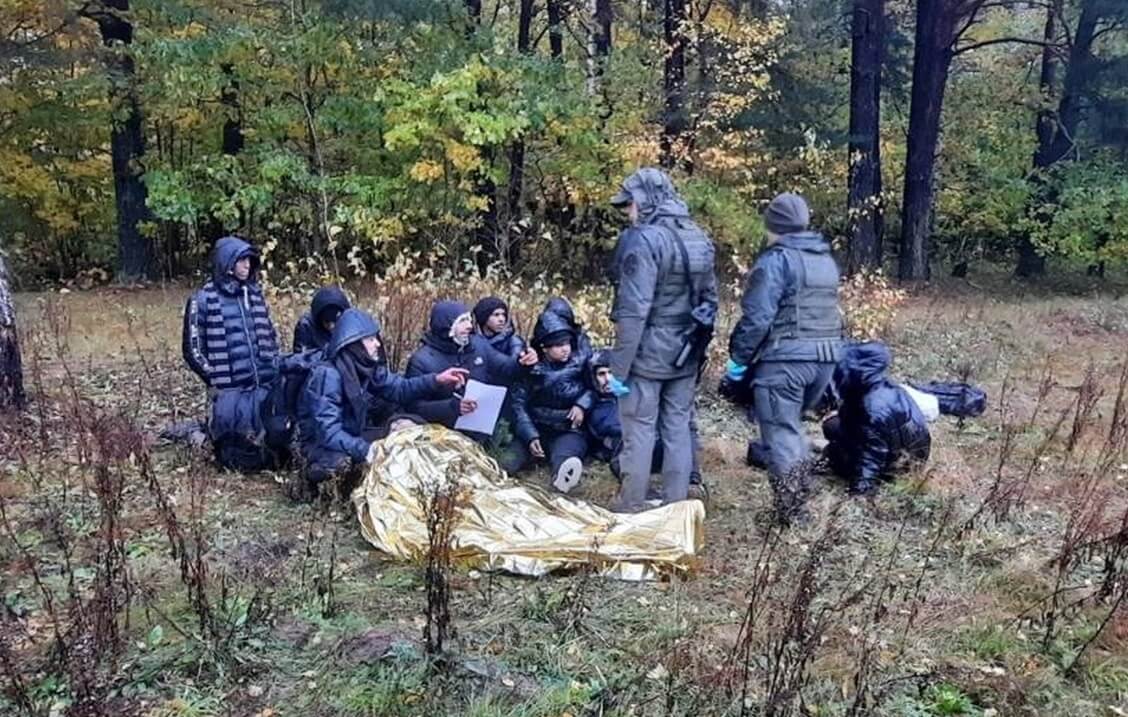
October 28, Pozirk. Alaksandar Łukašenka has reiterated his refusal to cooperate with the European Union on tackling irregular migration.
“Firstly, enduring comprehensive sanctions pressure, we don’t have spare resources or moral obligations to solve the problems of those who have imposed these sanctions. They are stifling us by sanctions while asking us to protect them… As soon as they imposed sanctions and severed cooperation on migration issues, I told them honestly and frankly that we will not be catching anyone and will not be protecting them,” Łukašenka said, speaking at the III Minsk International Conference on Eurasian Security on October 28.
He added that Poland, Lithuania and Latvia unilaterally curtailed all infrastructure and all cross-border cooperation projects.
He also repeated his claim that the West had “invited” migrants.
“The logic is simple,” Łukašenka explained. “If you have destroyed the bridges, do not ask us to build a crossing. We will not protect you with a noose around our neck. Sanctions are a noose around the neck of the Belarusian people. And you expect us to protect you? This will not happen.”
Only a small part of the international sanctions imposed on Minsk after 2020 are related to the migration crisis. The West introduced the toughest sanctions for the regime’s complicity in the Russian war against Ukraine.
The flow of people desperate to cross into the EU surged in spring 2021 after Alaksandar Łukašenka, angered by EU sanctions, had indicated that Minsk would not prevent asylum seekers from Africa and Asia from using Belarus as a route to the EU.
In June 2021, the Belarusian government suspended a readmission agreement with the EU in response to sanctions that followed the forced landing of a Ryanair flight in Minsk.
Latvia, Lithuania and Poland call the migration crisis a “hybrid attack” orchestrated by Minsk and Moscow.
Since the start of 2025, the EU has thwarted at least 40,549 irregular crossings via Belarus, 20.5 percent more year on year and 11.7 percent more than the total for all of 2024. Most of the attempts – 28,164 – targeted Poland. Latvia reported 10.970 attempts and Lithuania, 1,415.
Irregular Belarus-EU crossings surge 54 percent from October 2024
October 25, Pozirk. The neighboring European Union countries have not allowed at least 2,660 third-country foreigners to cross irregularly from Belarus since October, 1, 54 percent more than during the same period last year, according to Pozirk's analysis of border …