The material is available only to
POZIRK+Latvia Closes Border with Belarus Amid Fears Beyond Migration
The material is available only to
POZIRK+
By Viktar Ivicki
The 62nd Munich Security Conference (MSC) will take place from February 13 to 15, with Belarusian opposition leader Śviatłana Cichanoŭskaja in attendance.
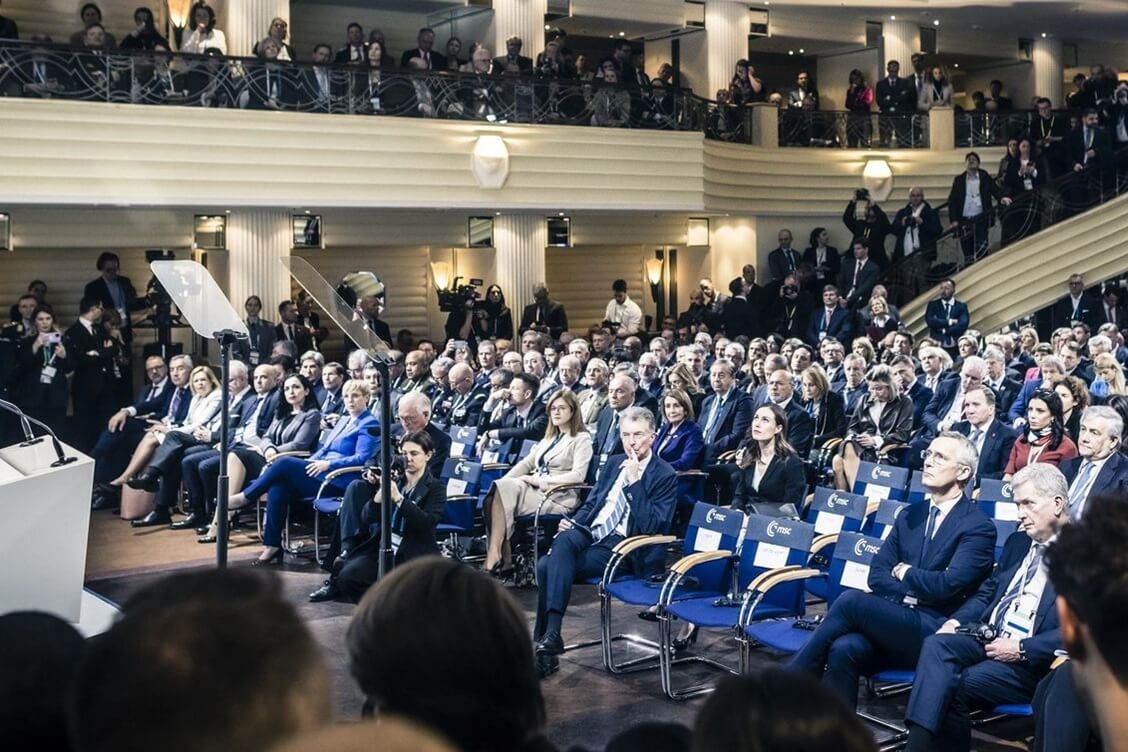
She will participate in the discussion “Belarus in the Spotlight,” scheduled for February 14. This marks the first time Belarus has been included in the MSC’s main program, Franak Viačorka, Cichanoŭskaja’s chief adviser, told The Viewer.
Over the past year, Belarus — both the regime and the pro-democracy forces — has simultaneously gained and lost agency. This divergence has been shaped primarily by three global players: the United States, Ukraine and Russia.
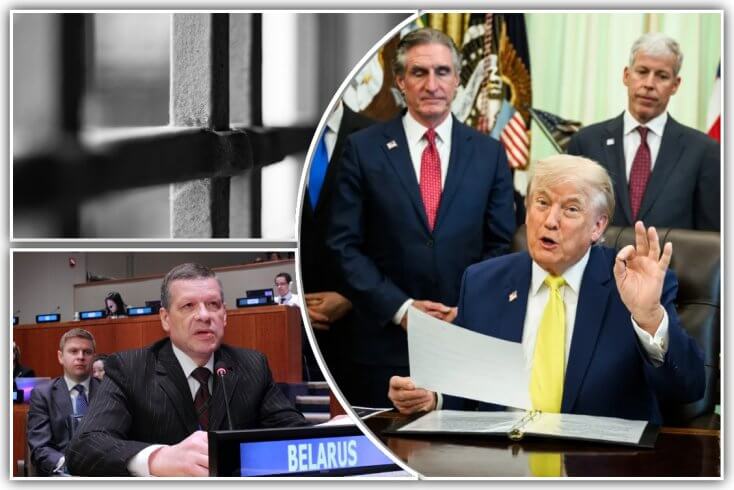
Following Donald Trump’s return to power in the United States, Alaksandar Łukašenka has been referred to by Washington as the “deeply respected President of Belarus” (though this characterization does not apply to Congress, and most officials within Trump’s own circle avoid such epithets).
For a time, the Belarusian ruler even became involved in US–Russia negotiations on Ukraine. In particular, the US leader phoned Łukašenka before his meeting with Vladimir Putin in Anchorage and later invited him to his Board of Peace for Gaza.
Minsk released hundreds of political prisoners in a deal with Washington in exchange for sanctions relief. Against this backdrop, the United States has also maintained ties with Belarus’ pro-democracy forces. However, a meeting between Trump and Cichanoŭskaja — who met with previous President Joe Biden — appears unlikely.
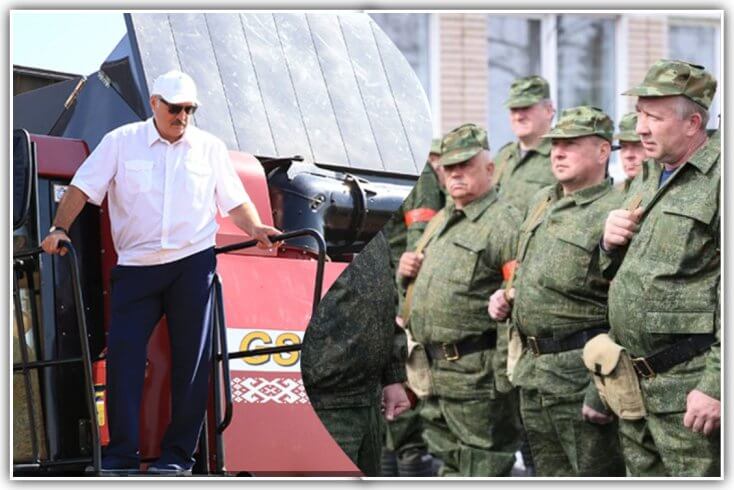
For its part, Russia has drawn Minsk further into its standoff with the West by deploying (or at least claiming to deploy — a claim questioned by BelPol) the Oreshnik, an intermediate-range hypersonic ballistic missile, in Belarus.
Meanwhile, last month Ukraine signaled a shift in approach by stepping up contacts with Belarus’ pro-democracy forces. President Volodymyr Zelensky has used much harsher rhetoric in his comments on Łukašenka’s foreign and domestic policies, remarking that the Belarusian leader’s “white Spitz has more rights than the Belarusian people.” On January 25 in Vilnius, he met Cichanoŭskaja face to face for the first time in a formal setting and invited her to Kyiv.
These developments are unfolding against the backdrop of Trump’s stated desire to end the war in Ukraine as soon as possible, enabling him to approach the fall midterm congressional elections with tangible achievements, as political momentum appears to be shifting. He has exerted significant pressure on Kyiv while displaying a comparatively conciliatory tone toward Moscow.
Belarus likely occupies a limited place in Washington’s geopolitical calculations. At the same time, in the eyes of Ukraine and much of Europe (with notable exceptions such as Hungary and Slovakia), the Łukašenka regime is viewed as an important instrument in the Kremlin’s hands — one that must be neutralized, as attempts to reach accommodations with him have proven futile.
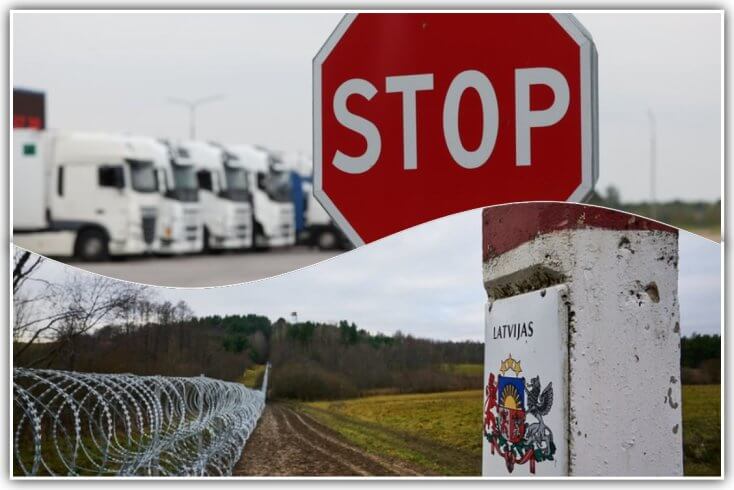
Belarus remains an open staging ground for the Russian army, posing threats not only to its immediate neighbors — including through the migrant crisis — but also to more distant Western countries. Moreover, politically motivated repression continues in Belarus. Were it to stop, the system might simply collapse.
In this context, Belarusian pro-democracy forces — which objectively have limited influence over major geopolitical actors — are using every available platform to convey the position of those opposed to Belarus being treated as a pawn in Russian President Vladimir Putin’s hands.
Below are Viačorka’s comments to The Viewer regarding the opposition delegation’s expectations for Munich.
“Alongside the Davos Forum, the Munich Security Conference is one of the most significant forums in the world. From Davos, which took place a month ago, and from Munich, many expect answers about what 2026 may bring — for Ukraine, Greenland, the Middle East and Iran. We also hope for answers regarding Belarus.
“This year, Belarus will receive considerable attention, which is a major achievement of the entire democratic community. If I am not mistaken, for the first time at the MSC, a panel dedicated to our country will be included in the main program. An American senator and the Lithuanian foreign minister will take part. Cichanoŭskaja has a packed agenda: in addition to the panel, she has more than ten meetings and over 15 interviews scheduled.
“There will also be several side events dedicated to Belarus, organized with the participation of Cichanoŭskaja’s Office and expert centers. In addition to Cichanoŭskaja, former political prisoners will take part. At one event on Saturday, February 15, Maryja Kaleśnikava will speak at the discussion ‘How to Make Democracies Great Again.’ Siarhiej Cichanoŭski is also registered as a forum participant.
“Belarusian journalist Hanna Lubakova will speak at the forum’s final panel. This highly prestigious event provides an opportunity to bring the Belarusian agenda to an international audience. The more visible Belarus is, the better for our cause.”
“For us, the most important task is to keep Belarus on the agenda, especially as the fate of Ukraine and the entire region is being decided. We are promoting Belarus specifically through the security dimension — demonstrating that this is not only a humanitarian crisis, but also a security crisis emanating from the Łukašenka regime. Without democratic change, Belarus will continue to pose a threat to Lithuania, Poland and all NATO countries. Therefore, the issue must be addressed comprehensively. A strategy on Belarus is needed.
“We have brought a number of documents that we will present — on the regime’s participation in the war, on the deportation of Ukrainian children, on mechanisms for holding the Łukašenka regime accountable and a ‘red paper’ on Belarus’ security in the context of European security. Many defense ministers and generals will be present, for whom Belarus remains a relatively little-known case that must be better understood.”
“We also have documents outlining a vision for how Belarus can contribute to de-escalation without losing its independence, because for us — as for our European partners — independence is key. On the one hand, the humanitarian crisis must be resolved, political prisoners released and repression stopped; on the other hand, Belarus must be pulled out of Russia’s grip.
“When we first came to Munich four years ago, there was little understanding of what Belarus was. Now that understanding exists, but we need practical joint steps — a strategy developed together with Western partners.
“It is important that the voices of former political prisoners be heard — both Siarhiej Cichanoŭski and Maryja Kaleśnikava, who endured torture — so they can speak personally about the Łukašenka regime from the inside.
“This is also an opportunity to draw attention to Belarus. At a time when the world is facing so many crises, this is extremely important.”
“I believe the central theme of many discussions will be how to stop Russia. We explain that Belarus is also key in this regard. We see the activity of Russia’s Foreign Intelligence Service and threats coming from Russian officials, politicians and diplomats. They have seized Belarus and do not want any change in our country. But it is not Russia’s place to decide Belarus’ future. We would like the world to see Belarus not as Łukašenka’s regime subordinate to Putin, but as a nation of people who want to live in freedom. We need to shape these perceptions.”
“We are pleased that there will be many events with Ukrainians. It is very important that President Zelensky and the Ukrainian leadership have begun paying increased attention to Belarus in the security context.
“Our task is also to demonstrate the military preparations related to the Oreshnik system and Russian nuclear weapons. This is not a bluff; it is a real risk, because infrastructure dangerous to many European capitals has been created in Belarus. Even if there are no nuclear warheads or Oreshnik missiles there at present, that does not mean they cannot appear, since the necessary infrastructure is already in place.
“Łukašenka now appears to be in the shadows, barely visible and attempting to maneuver, but we need to shine a light on what is happening in Belarus. This is not only about Russia’s quiet expansion, but also about the buildup of military potential and presence that threatens Belarusians themselves and Europe as a whole.”
Participation in the discussion “Belarus in the Spotlight”; meetings with MSC young leaders, NATO officials, Czech Deputy Prime Minister and Foreign Minister Petr Machinka, UN High Commissioner for Human Rights Volker Türk, and members of the European Parliament; interviews with The Times, The Telegraph (UK), Rzeczpospolita (Poland), Dagens Nyheter (Sweden), CBS News, Politico (USA) and Die Welt (Germany).