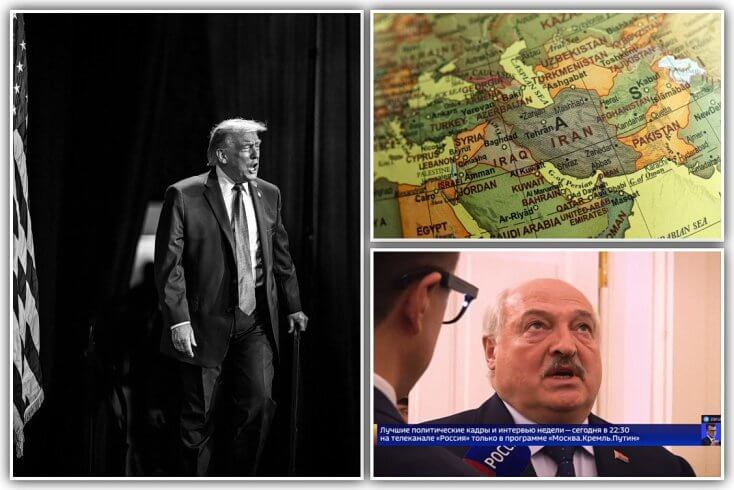
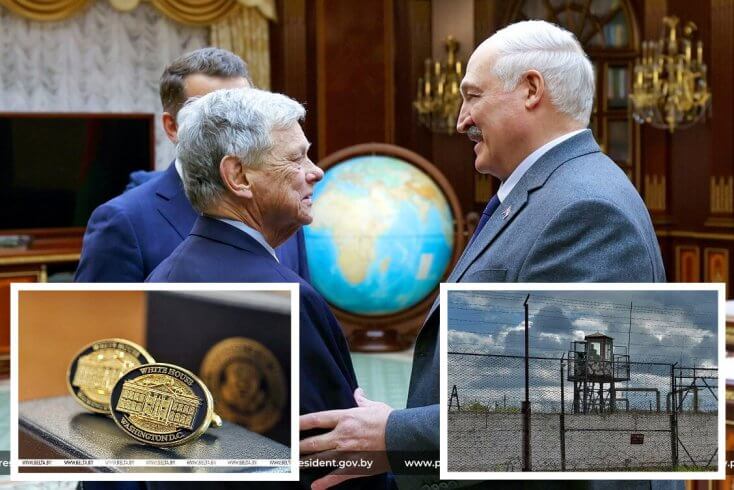
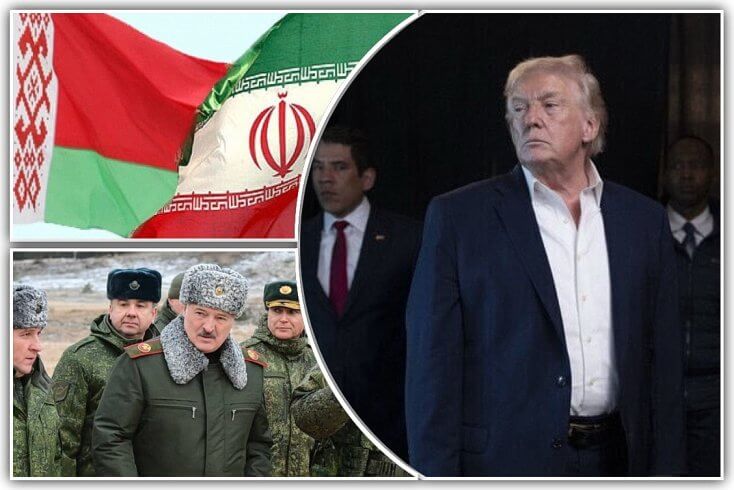
Alaksandar Łukašenka on February 16 defended his engagement with Washington during a meeting with Sergei Glazyev, secretary of the Union State, stressing that Minsk does not resolve its issues at Russia’s expense. The Belarusian strongman reiterated his commitment to the alliance.
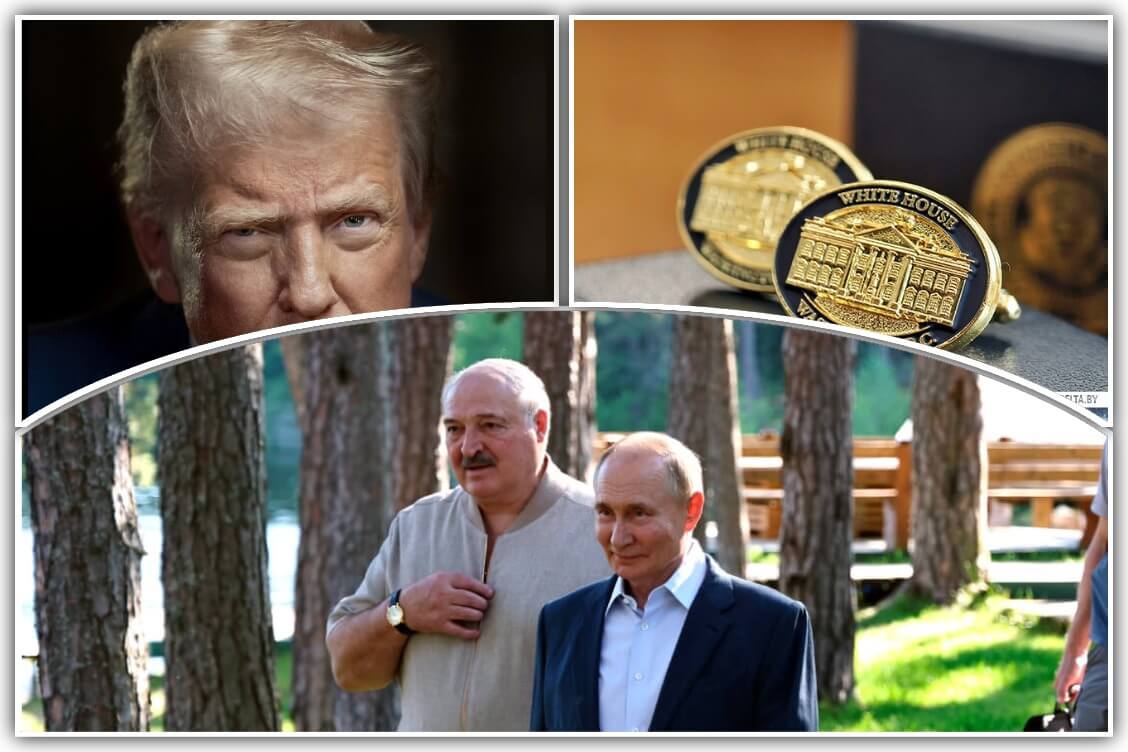
“No force in the world” can separate Belarus from Russia, he claimed.
His remarks followed a statement by Russia’s Foreign Intelligence Service (SVR), which accused the West of seeking to weaken ties between Minsk and Moscow and to use Belarus’ 2030 presidential election to change the country’s “constitutional system.”
On the same day, Mikhail Galuzin, a Russian deputy foreign minister, urged Minsk to exercise caution in its dealings with Washington.
Cautious signal from the Kremlin
Galuzin stated that despite lifting sanctions on Belarus’ Biełaviaja airline, the US administration “has not yet given up on its policy of pressure on Byelorussia.” In effect, he warned Minsk against making excessive concessions to the United States while negotiating what both sides describe as a “grand bargain” — the release of political prisoners in exchange for sanctions relief.
Moscow may be irritated that Łukašenka has managed to find common ground with Washington — something the Kremlin itself has struggled to achieve.
Not surprisingly, the SVR named US agencies and foundations as the primary forces allegedly plotting to democratize Belarus, despite the fact that the administration of Donald Trump significantly reduced global funding for democracy promotion.
Russian intelligence services are undoubtedly aware of this contradiction. Nevertheless, they fear that a grand bargain between Minsk and Washington could reduce Łukašenka’s dependence on Moscow, while the Kremlin seeks to maintain full leverage over its ally.
Responding to Moscow’s warnings, Łukašenka emphasized his political experience, asserting that he could teach others — including the Russians — how to “deal with this wild West, of which the United States is the main part.”
Gaza board: opportunity and risk
The Kremlin may also be displeased with Łukašenka’s swift decision to accept Trump’s invitation to join the Board of Peace for Gaza, while Vladimir Putin remains hesitant. Putin, who spoke with Łukašenka by phone on February 8, may have advised him against traveling to the United States for the board’s inaugural meeting.
Belarus will instead be represented by Foreign Minister Maksim Ryžankoŭ.
Although Łukašenka denied receiving any advice from Putin, he has a well-known tendency to reject claims he prefers not to acknowledge.
For Łukašenka, participation in the Board of Peace resembles a rose garden — full of sweet-smelling opportunities to engage Washington in negotiations, yet lined with thorns that could easily wound him.
He appears unwilling to make substantive political concessions, but he must offer something in return for the invitation and Trump’s diplomatic overtures.
Łukašenka assured Glazyev that he would discuss Belarus’ participation with Putin: “Maybe Vladimir Vladimirovich’s arguments will change my position, or maybe he will hear something new from me.”
“We are seriously determined to work on the Board of Peace — as seriously as possible — not to flatter anyone, not to adapt to anyone, but to take a stance, a sovereign stance,” he said.
He added that he intends to attend future board meetings personally and even suggested he could advise Trump on dealing with Venezuela.
“They carried out some kind of operation, captured a man. So what? They showed the whole world who’s who. And most importantly — what next? I have suggestions on how to get out of this situation. And if they want to resolve it with dignity and grace, we are ready to work with Donald Trump in this regard.”
Despite the Kremlin’s warnings, Łukašenka appears eager to seize the opportunity.
Moscow’s anxiety over succession
It is easy to understand why Moscow is wary of Łukašenka’s outreach to Washington. It is less clear why it is so focused on the 2030 election, which remains several years away.
It is unlikely that the Kremlin genuinely fears, as the SVR suggests, Western efforts to recruit “new liberal activists” to stage another color revolution. Łukašenka remains acutely aware of that risk and continues to maintain a high level of repression to prevent a repeat of the events of 2020.
More plausibly, the Kremlin is concerned about an eventual transition of power in what it considers its strategic outpost.
Łukašenka is aging, even if he has reportedly improved his health. The SVR statement may therefore serve as a signal to Łukašenka and his inner circle that any succession plan must receive Moscow’s approval.
The Kremlin may believe that Łukašenka’s son Mikałaj lacks sufficient experience, or it may harbor reservations about Viktar. More broadly, Moscow likely fears that a future leader could pursue liberal reforms and deeper engagement with the West.
By raising the issue now, the Kremlin appears to be establishing a principle: any future ruler in Belarus must have Moscow’s consent.
Specter of a manufactured crisis
As for the threat of a color revolution, Russia has demonstrated its capacity to manufacture pretexts when necessary. A local incident — real or staged — could be used to justify intervention.
For example, Moscow could claim that extremists are attempting to seize Russian nuclear munitions or Oreshnik missiles stationed in Belarus.
It could then orchestrate a controlled vote similar to the referendum held in Crimea in 2014, potentially installing a compliant leader or even initiating a referendum on Belarus’ accession to Russia.
Whether the West could or would prevent such a scenario remains an open question — one that merits separate analysis.
What is clear is that Russia’s fixation on “historical lands” and the restoration of lost greatness poses a profound challenge to Belarusian sovereignty.

Łukašenka’s predictions of Russia’s victory in Ukraine are a losing game
By Viktar Ivicki Alaksandar Łukašenka likes to make predictions, but as far as Ukraine is concerned, he has demonstrated poor foresight so far. He clearly did not expect Kyiv to change its policy toward Belarus after the appointment of Kyrylo …