Despite Ukrainian air strikes on infrastructure in occupied Crimea, tour operators in Belarus, a landlocked country, continue to advertise and sell tours to Black Sea resorts on the peninsula. Operators also sell tours to Abkhazia, Georgia’s breakaway region under Russian control.
One Belarusian woman was killed and a child seriously wounded in a drone attack on a tour bus in Russia on June 17.
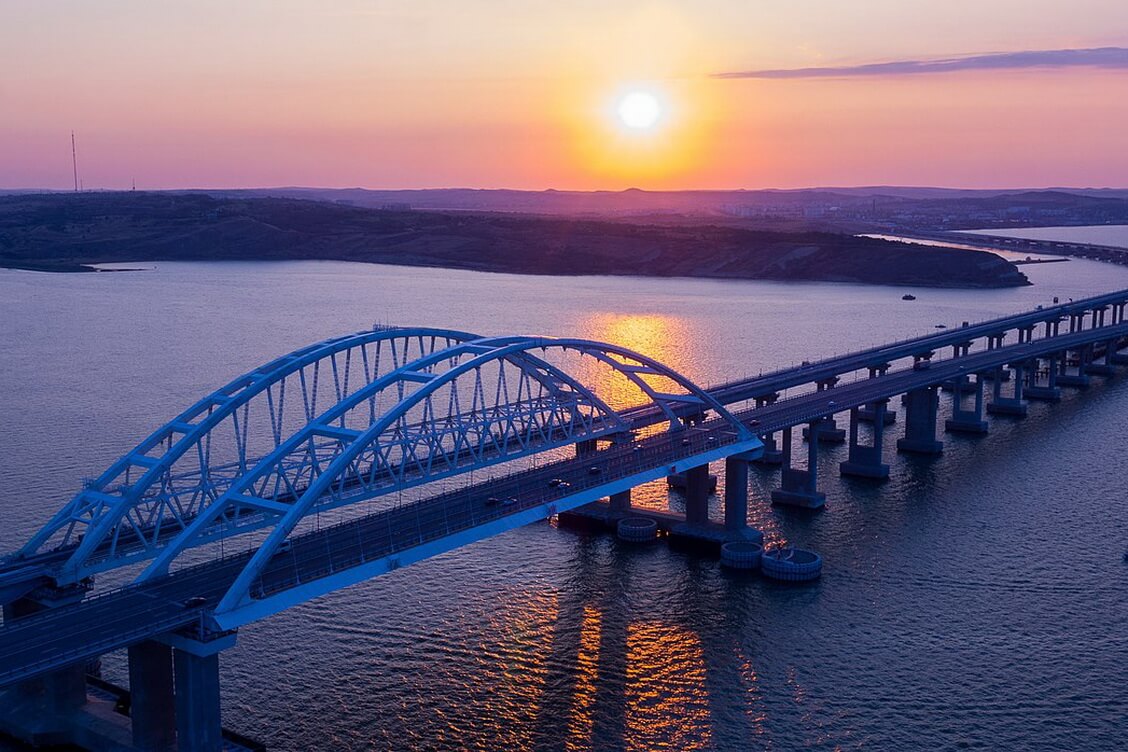
The Crimea Bridge
Cheap and dangerous
To reach Crimea or Abkhazia, Belarusian tourists must undertake a long and potentially dangerous journey by bus or train through Russia. Nevertheless, such tours remain popular because of their affordability, costing several hundred US dollars less than, for example, flying to Georgia.
Holiday.by advertises about 100 tours to Crimea and more than 420 tours to Abkhazia departing from Minsk.
Taŭryka Tur transports tourists by bus from Minsk via Babrujsk, Žłobin, Homiel, Orel, Voronezh, Rostov-on-Don and Feodosia to Sudak for a 14-night vacation costing just $140, plus a $50 reservation fee, with accommodation included.

The tour operator has been organizing trips to Russian-occupied Crimea since the summer of 2014.
The most expensive package offered by the company costs more than $2,000 and includes a lengthy journey from Minsk to Alushta for a 10-day vacation.
Most Crimea tours advertised on Holiday.by involve four nights of travel by road.
Crimea bridge and other adventures
Tourists travel to Crimea via the bridge connecting the peninsula with Russia’s Krasnodar Krai. The bridge has long been a target of Ukrainian air strikes and other attacks. Russian troops carefully inspect all vehicles entering Crimea, often resulting in long queues and significant delays.
Crimea has also been targeted by drone strikes, which have contributed to severe fuel shortages on the peninsula.
Pozirk asked two tour operators to comment on the risks associated with the advertised trips, but both declined to answer questions by phone and instead invited the journalist to visit their offices.
The Ukrainian Armed Forces attacked bridges linking Crimea to the mainland in early June in an effort to disrupt Russian military logistics.
Robert Brovdi, commander of Ukraine’s drone forces, said on June 14 that the strikes had significantly reduced traffic along the Novorossiya highway running along the Azov Sea, a key Russian supply route.
In an interview with Reuters, he expressed hope that Ukraine would be able to fully control the route within a month.
Following sustained Ukrainian strikes on Russian energy infrastructure, Crimea introduced fuel rationing in late May.
The fuel crisis reportedly eased somewhat in mid-June. However, it also triggered panic buying in grocery stores, prompting some retailers to impose limits on purchases of certain food items.
Ukrainian Digital Transformation Minister Mykhailo Fedorov said Ukraine aims to completely isolate Crimea using drones.
“The Crimea tourist season will be only for our drones this year,” he joked.
Bus attack
One Belarusian woman was killed, while five children and one adult were wounded in a drone strike in Russia on June 17 that Moscow immediately blamed on Ukraine.
Two passenger buses departed from Rečyca for Gelendzhik early Wednesday morning, carrying about 90 people, including 41 children. At around 11 a.m., a passenger informed local authorities of a drone attack in the Bryansk province. The bus that was hit reportedly carried 43 passengers, including 28 children enrolled in soccer programs.
The trip to Russia was organized as an annual summer retreat funded by the participants’ parents. According to the Homiel Regional Soccer Federation, a different route had usually been used in previous years.
The General Staff of the Armed Forces of Ukraine denied any involvement, stating that Ukrainian forces had not used unmanned aerial vehicles against targets in the Bryansk province at the time of the incident.
Ukraine’s parliamentary commissioner for human rights, Dmytro Lubinets, wrote on Telegram on Wednesday evening that he had “urgently contacted” Belarusian authorities and received “preliminary information” about the incident. Lubinets stressed that Ukraine “has absolutely nothing to do with it.”
Meanwhile, some social media users speculated that Russia might have staged the attack in an attempt to draw Belarus deeper into its war against Ukraine.
Belarusian ruler Alaksandar Łukašenka acknowledged that the drone was of Ukrainian origin, but warned against drawing premature conclusions that the strike was carried out by Ukraine and spreading conspiracy theories before the investigation is complete.
He told officials to ban all unauthorized travel to unsafe regions. “Listen, don’t we have enough land to play soccer? We have enough pitches for children’s and adult teams to play soccer in a good human way normally. Quite enough,” he said on June 18.
Crimea tourism on the rise
About 150,000 Belarusian tourists vacationed in Crimea in 2024, according to Raman Čarhiniec, chairman of the Russian-controlled regional national and cultural autonomy Belarusians of Crimea.
Last year, the number of visitors to Crimea rose by 15 percent to 6.9 million, according to the tourism ministry of the Russian-controlled territory. The ministry said that 76 percent of tourists arrived by car or bus.
This year, many Belarusians still appear interested in vacationing in Crimea. Questions such as “I want to go to Crimea, who has been there?” frequently appear on social media forums.
Some users reassure concerned travelers that Crimea is safe and that the fuel crisis will soon be over.
Others warn against visiting Sevastopol, Saki, Yevpatoriya and remote beaches.
From Alushta, one user wrote: “Everything is quiet, the water is cool, there’s no oil pollution, but fuel is really in short supply, so bring some with you.”
One Belarusian woman from the Homiel region complained that she could not persuade her husband not to travel to Anapa, Krasnodar Krai, in mid-August. Other users warned her that visiting regions regularly targeted by drones was a game of Russian roulette.
After the bus strike, the woman posted a short update: “It has been decided. We are not going to Russia. Thank you for your attention.”
Another user described friends planning to take their children to Crimea as “fatalists.”
“What are they watching on TV that switches off their basic security settings?” she wondered.
Child in serious condition after drone attack that killed a Belarusian woman in Russia
June 18, Pozirk. One child wounded in yesterday’s drone attack in Russia, underwent surgery at night and is being transported on life support to Minsk, according to the Belarusian health ministry. One woman was killed. In all, five Belarusian children …