The material is available only to
POZIRK+Warsaw tests limits of Łukašenka’s independence from Moscow
The material is available only to
POZIRK+
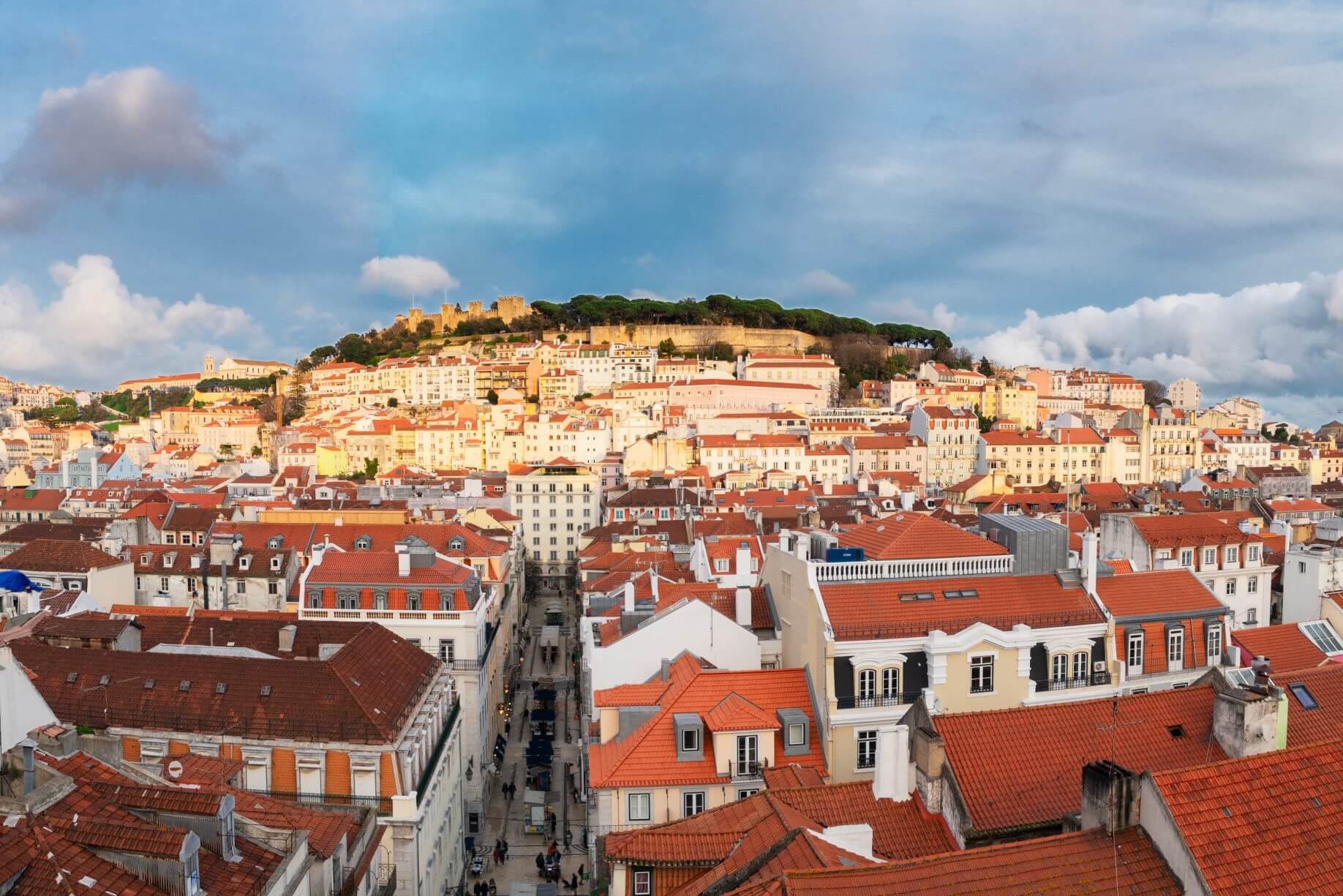
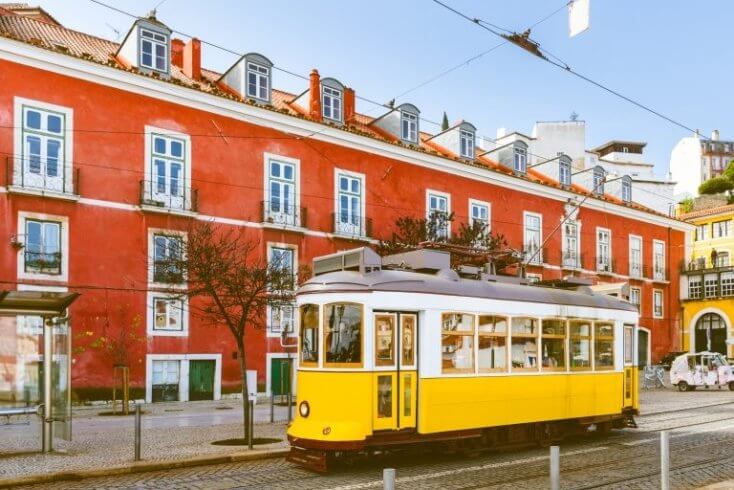
The Atlantic stretching thousands of kilometers to the horizon, stunning cuisine, distinctive architecture and quality service — Portugal and its capital, Lisbon, are rightly among Europe’s top tourist destinations.
For Belarusians, this city, popular with tourists from around the world and majestically perched on seven hills where the river meets the ocean, is like a book that requires virtually no translation.
Several thousand of our compatriots who settled here after 2020 can read it with ease: programmers and journalists, entrepreneurs and artists, young families with children, including those born already under Portuguese skies.
The book is also easy to read for those who come for a short stay, so to speak, just to leaf through it.
A walk around Lisbon is always more than a tourist itinerary, especially if you keep in mind what the city and the country have been through.
But first, a look back at the recent past.
In September 2009, the author of this article flew to Lisbon with Barysaŭ football club BATE for a UEFA Europa League group-stage match against Benfica. At the same time, a bus carrying fans and other journalists made a 4,000-kilometer journey from Barysaŭ to the Portuguese capital across Europe. One of the fans who arrived on that bus met the plane at the airport. Saying, “Public transport is free today” (as part of European Mobility Week), he flatly insisted that I go with him to explore the city, which he had already had time to see and admire while waiting for the team to arrive.
We walked almost without stopping, undeterred by the steep terrain and fatigue. Our colleague, who possessed encyclopedic knowledge, kept talking about Lisbon, which he had read about before the trip and was now reading with his own eyes, without the intermediary of guidebook authors.
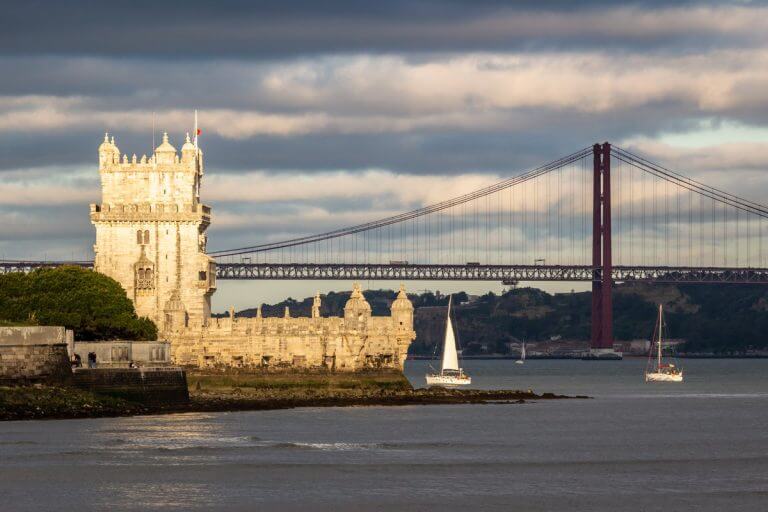
We used our press credentials to visit several museums, as well as the famous Belém Tower (Torre de Belém), free of charge or at a discount. Built in the 16th century, the tower commemorates Portuguese explorer Vasco da Gama’s discovery of a sea route to India.
That evening, at the Estádio da Luz (“Stadium of Light”), BATE held its pre-match training session. Anatol Kapski, the club’s owner, who had traveled all over the world, stepped onto the green pitch and said with a blissful smile: “This is a country I would like to live in.”
Perhaps he would be living here now if he had not died prematurely in 2018.
BATE lost 0–2 that day, and it seems to have been one of the very few defeats that did not upset Kapski too much.
The next time one of us made it to Lisbon was in 2014, when the Portuguese capital hosted the UEFA Champions League final. There was time not only to watch the game but also to take a closer look at both the city and its people. There turned out to be far more similarities in character than differences.
The first thing that stood out was that, like us, locals have no sense of grandeur or superiority over others. They see you as an equal. And they observe you first, only opening up afterward.
Like Belarusians, the Portuguese tend to reflect rather than show off. They are a kind of people who take a keen interest in the world around them. For centuries, that world has been harsh toward them.
The Portuguese language has the word saudade. It has no single equivalent in English: it is something between longing, nostalgia and the acute feeling of something that is gone forever. Philosophers call it a key word of the Portuguese soul, an important element of the local mentality.
Belarusians understand this word without lengthy explanations. Their native language has an almost exact equivalent of saudade — žurba.
Just as the Portuguese once did, Belarusians today are tormented by longing for time irretrievably lost to dictatorship. In Portugal, that dictatorship was built by economist (and part-time lawyer) António de Salazar; in Belarus, by economist (and part-time historian) Alaksandar Łukašenka, who, if nothing changes, will catch up with his “colleague” in four years in terms of time in power.
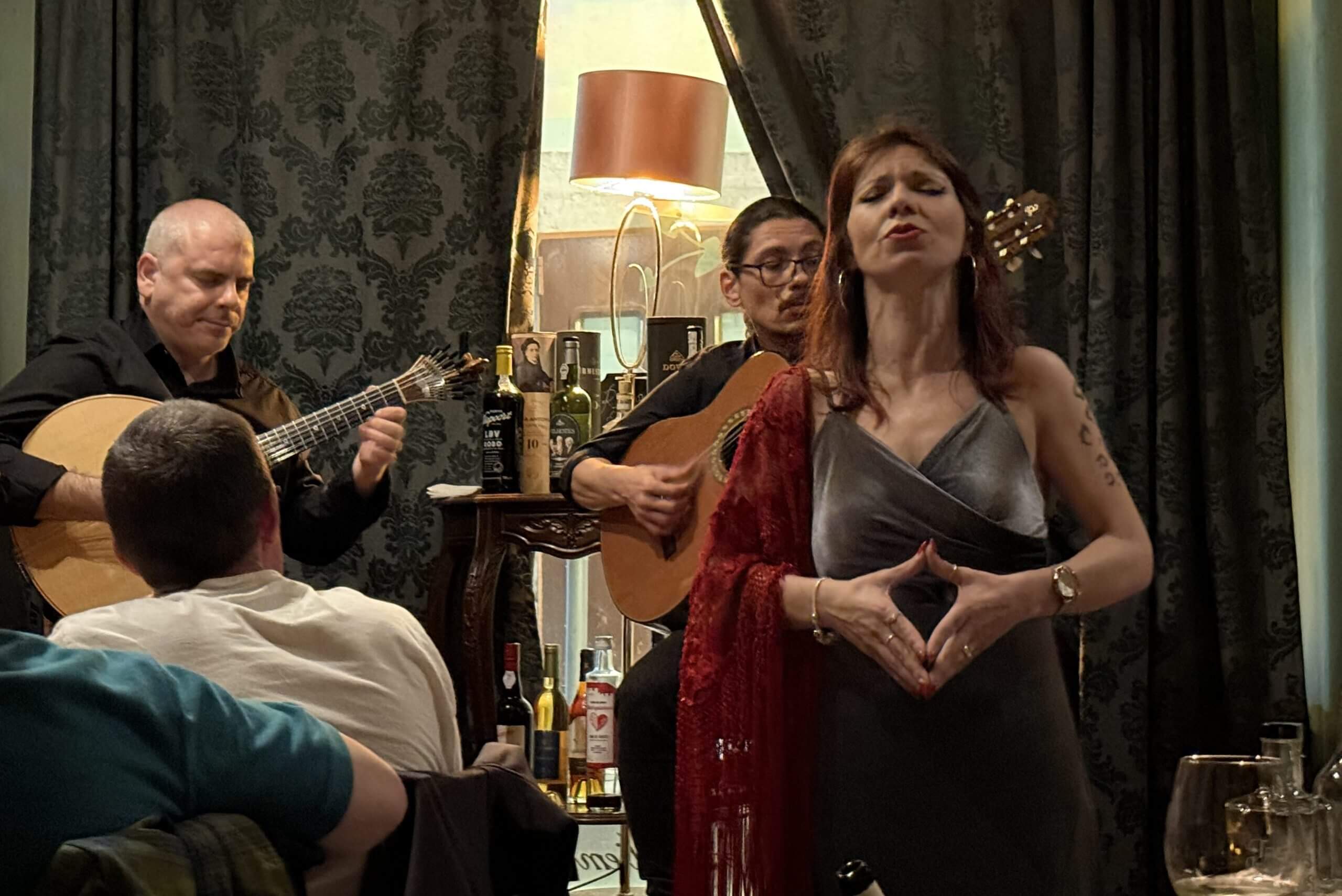
Still, when it comes to understanding the local mentality, as well as the city itself, it is better to trust the eyes and ears of someone who has lived here for some time rather than those of a tourist.
Our compatriot, whom we will call Siarhiej, has lived in Lisbon for more than four years. He works in computer design, a profession that naturally involves thinking in comparisons and images.
“Portuguese people reminded me of Belarusians in some way right away. To this day I can’t figure out exactly which part of their character brings this to mind, but I’ve decided for myself that it is a shared trauma of dictatorship. They are also kind and helpful, and pleasantly different from the noisier and more superficial Spaniards. People from northern Portugal may seem rougher and more straightforward, while people from former colonies tend to be more open and cheerful,” he says.
There is a place in Lisbon, beneath the nearly two-kilometer-long Ponte 25 de Abril, formerly named after Salazar, that will feel painfully familiar to Belarusians, especially on their first visit to the Portuguese capital.
This is LX Factory, a former 19th-century textile factory turned cultural district. Or, as Siarhiej puts it in more academic terms, a “gentrified neighborhood.”
Coworking spaces stand alongside galleries, restaurants alongside workshops, while a bookstore with Lisbon’s largest selection of literature occupies a former factory floor. It looks pretty much like Minsk’s Kastryčnickaja Street in its best days.
LX Factory is a place loved by the diaspora, regardless of nationality. Here, you feel part of the city without being obliged to assimilate into it.
You can work, meet people, listen to music, enjoy the traditional Portuguese pastry pastel de nata at an outdoor table — and speak Belarusian, Ukrainian or Russian without anyone turning around.

Any analogy between Lisbon’s and Minsk’s landmarks and locations would be rather forced, since their histories and cultures are simply too different, our compatriot stresses. “But there is a similarity in terms of function and the way they feel,” he adds.
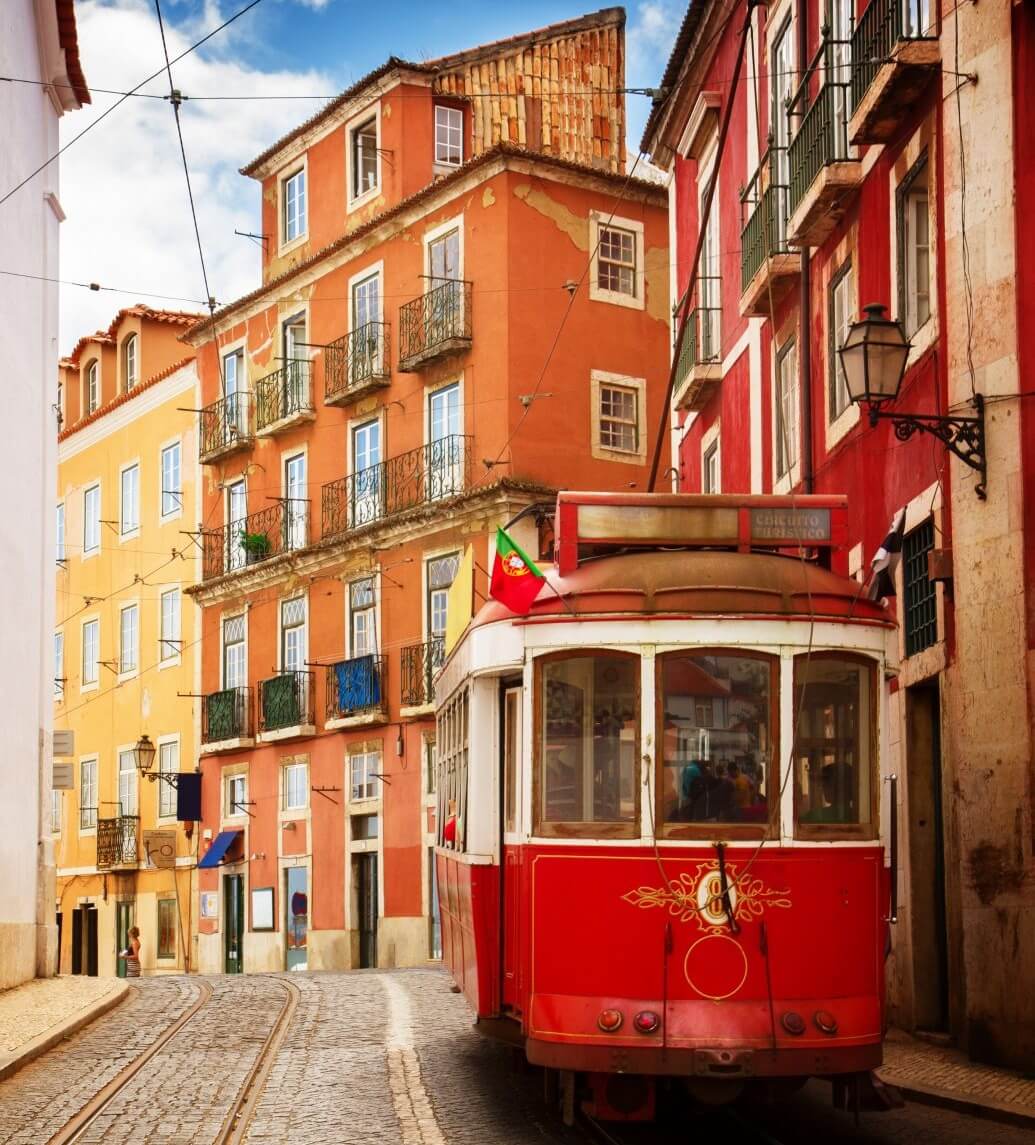
Alfama is arguably the only historic district of Lisbon to have survived the 1755 earthquake. It consists of a maze of narrow medieval streets on a hill, at the foot of which huge cruise ships arrive every day along the Tagus (Tejo).
The Tagus is a large navigable river increasingly affected by saltwater intrusion. Dolphins and huge jellyfish can be spotted there, and whales occasionally swim in. In Minsk, places with a similar spirit might be the Trinity Suburb with the Svisłač River and the Upper Town, Siarhiej says, drawing on his experience of exploring every corner of the Belarusian capital.
Lisbon’s Praça do Comércio, also known as Palace Square (before the 1755 earthquake, the Ribeira Palace stood here), is one of the largest squares in Europe and the site where the penultimate king of Portugal, Carlos I, was assassinated in 1908.
“It resembles Kastryčnickaja Square: just as empty and paved with tiles,” he says.
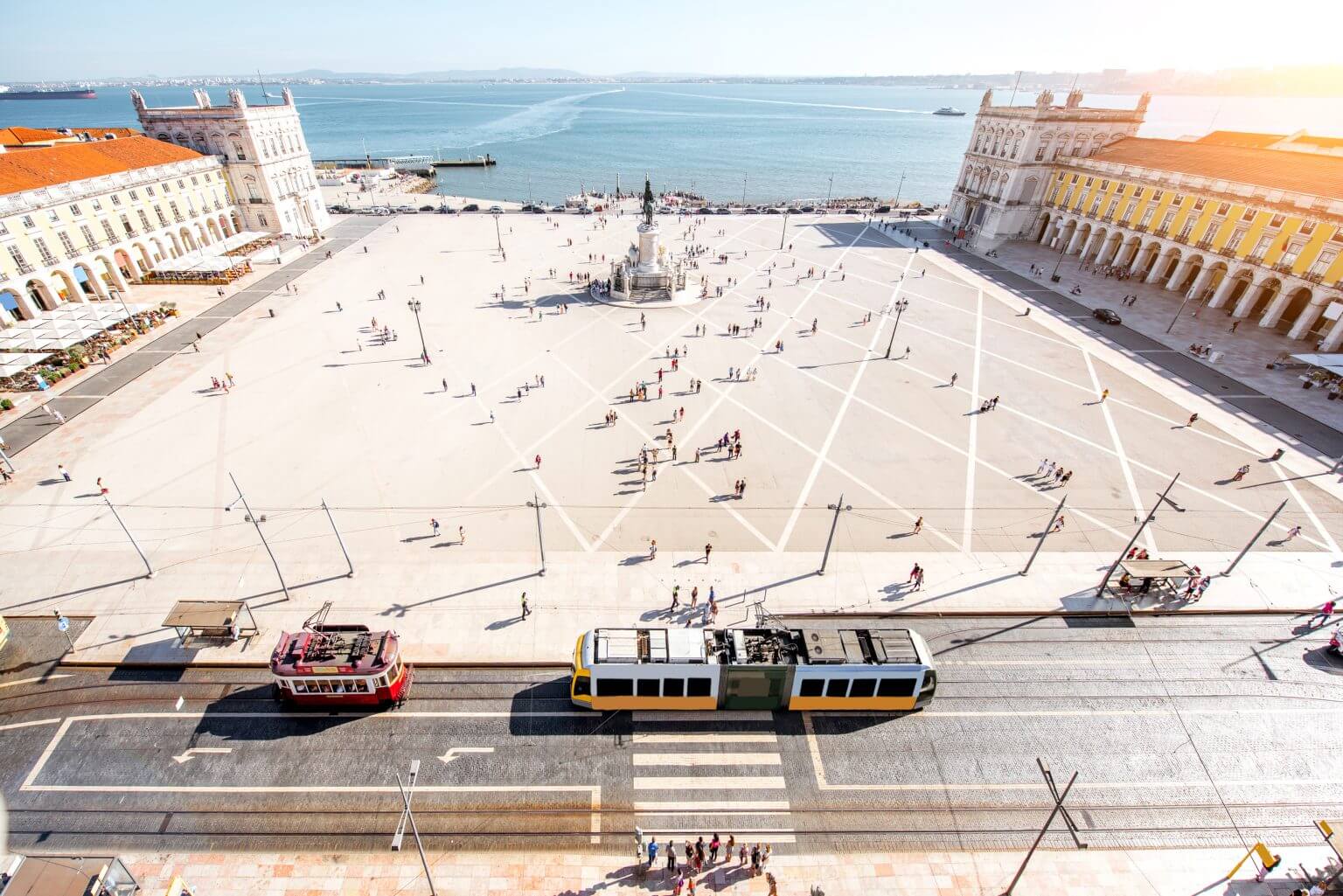
Visitors to Lisbon are usually advised to begin their journey here, at Rossio Square (Praça do Rossio, also known as Praça de D. Pedro IV), Lisbon’s main square, paved with black-and-white calçada portuguesa, creating a wave-like pattern or the effect of “falling waves.”
Siarhiej sees a resemblance to Minsk’s Independence Square: “A central, ceremonial city square. A place for meetings and transport, the architectural façade of the capital. Although Rossio is much older and livelier as a pedestrian space, it is cozy, whereas Independence Square is more monumental and out of proportion with people.”
Fountains, trams, cafés with wicker chairs outside, solo tourists and small tour groups. All of this has existed here for decades, and some of it for centuries. There is something almost indecent about this continuity — especially if you know that this very square and the cafés around it once witnessed tragic scenes from European history.
In the Middle Ages, the Inquisition executed Jews and heretics here. And in 1940–41, when neutral Portugal was the only place in Western Europe from which people could board a ship to America, Brazil, Canada and other safe destinations around the world, tens of thousands of Jewish refugees from Germany, Austria, the Netherlands and Poland fleeing the Nazi occupation came here.
Rumors about visas and available berths on ships circulated by word of mouth in Rossio. People did not simply wait out the disaster here; they waited for salvation. Perhaps there is a particularly powerful symbolism in this for modern Belarusians, who are waiting for better times.
Today, tourists and locals drink coffee in Rossio, pigeons peck at crumbs by the fountains, and the city’s oldest pharmacies and tobacco shops remain open. Nothing indicates what happened here. But once you know, the square looks at you differently.
And a few more observations from our perceptive Siarhiej about the similarities between the two capitals.
The Belém district (Santa Maria de Belém), with its parks and museums, is somewhat reminiscent of Pieramožcaŭ Avenue.
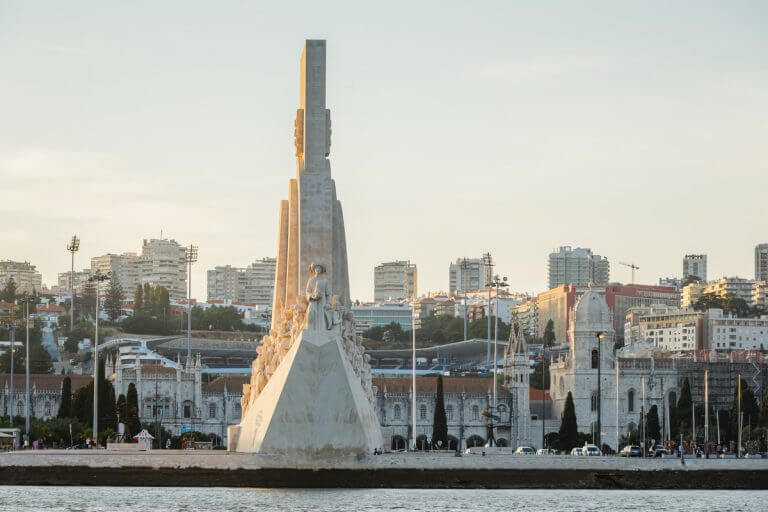
The restaurant district of Bairro Alto, high on a hill, is “Zybickaja done right.” Yet Lisbon — and Portugal as a whole — has something Minsk sadly lacks: “There are many family businesses, restaurants and hair salons where generations of the same family work. They have operated for decades, even centuries, under the same sign, so as you walk around you can encounter everything from carved wooden signs dating back to the 18th century and 1930s neon to Art Deco and modernism.”
The Castle of São Jorge (Castelo de São Jorge) is a visible symbol of the ancient city but, sadly, has no counterpart in the Belarusian capital, where Minsk Castle did not survive. Some administrative buildings from the mid-20th century, however, bear a strong resemblance to Belarusian ones.
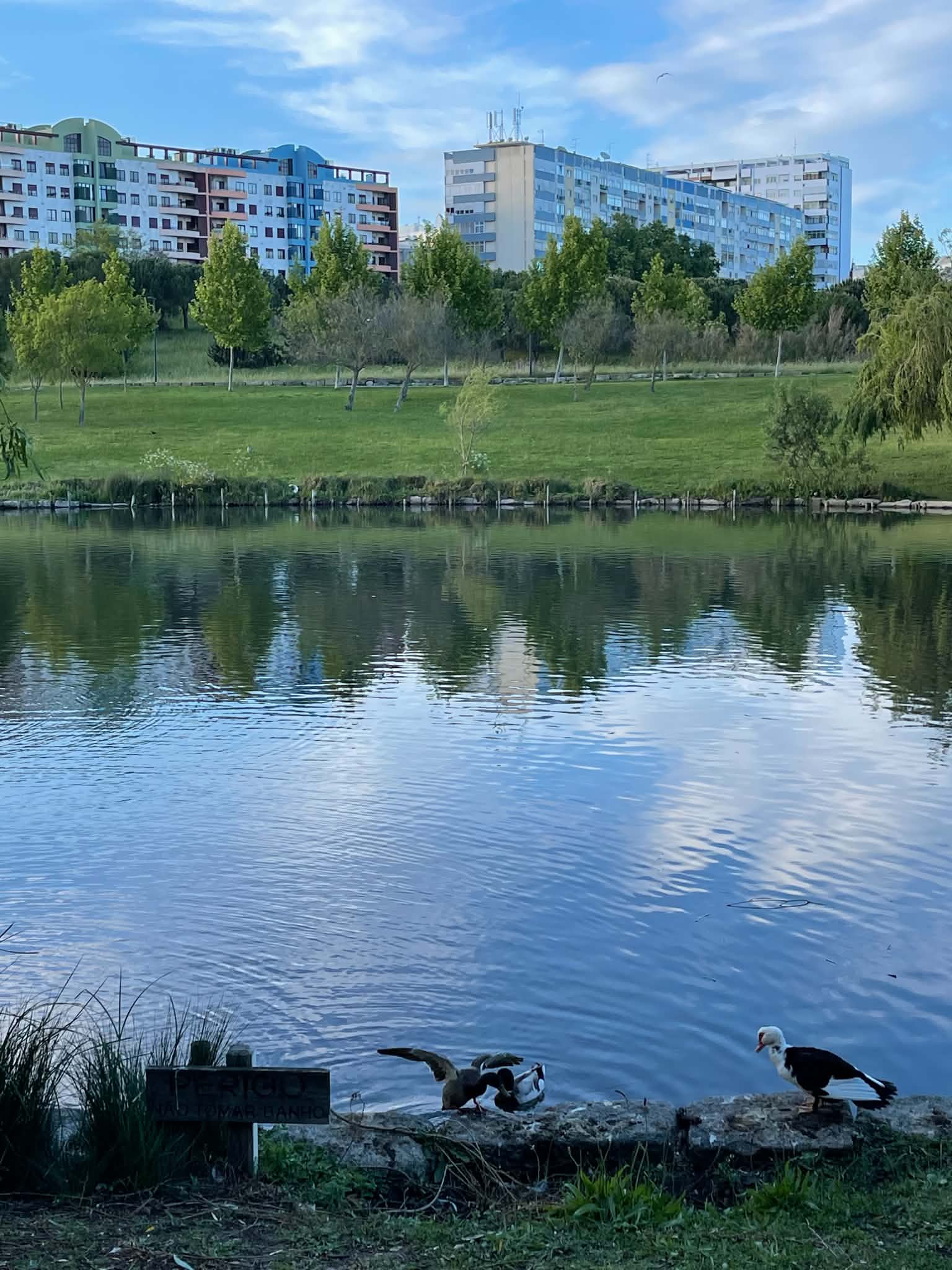
And Peace Park (Parque da Paz) in Almada, part of Greater Lisbon, “brought back memories of the Slapianka water system,” Siarhiej says, suggesting we take a look at this photo.
If you climb up the Bairro Alto hill, you come to a small, quiet square — Largo do Carmo. It is home to a Gothic Carmelite monastery built in the 14th century and destroyed in the same 1755 earthquake.
Nothing was rebuilt here. The church nave still stands roofless, open to the sky, with grass growing between the paving stones. In many countries, ruined places of worship that were simply left unrestored have become monuments to important events.
This place also remembers another event that, on closer inspection, will inevitably resonate with Belarusians as something familiar, something deeply their own.
On April 25, 1974, a peaceful revolution took place in Portugal. Here, soldiers chose flowers instead of bullets, just as the bright posters on the streets of Minsk in the summer of 2020 called for. Here, the Portuguese dictatorship collapsed almost bloodlessly — an ideal scenario for protests that someone, once, actually managed to achieve.
The “Carnation Revolution” was perhaps the most beautiful political event of the 20th century: the dictatorship fell not to bombs but to flowers, and Belarusians can proudly say that they tried to do the same.
Portugal remembers its victory over evil: every year on April 25, it celebrates Freedom Day. In a country that knows what decades without elections and a free press are like, the word “freedom” has a special meaning — and Belarusians understand this like no one else.
Salazar’s period of rule in Portugal is known as Estado Novo (“New State”). He left behind many infrastructure projects, but none is unequivocally associated with the dictator’s personal wishes or initiative.
Salazar’s regime maintained a close alliance between the state and the church and used the image of a Catholic and peaceful Portugal to legitimize itself (sound familiar?). Thus, the Cristo Rei monument — “Christ, almost like in Brazil” — located in Almada near the 25 de Abril Bridge, is a visual symbol of the cultural and religious atmosphere of the Estado Novo. But its construction was initiated by bishops, not Salazar personally.
Its main legacy is not nostalgia for “Portuguese order,” but the memory of an authoritarian state, one-party rule, censorship, political trials, surveillance, repression and colonial wars, Siarhiej stresses.
Lisbon offers those who have ended up here for longer than planned, or who have come here on a planned excursion, something that is neither assimilation nor a ghetto, but a third option: the right to be yourself in a foreign city that, over time — regardless of how long you stay — ceases to be foreign because there are simply too many parallels, too much in common despite the distance and the paradoxical nature of all these coincidences.
Lisbon is a city that has been through a lot and learned to live by accepting its past and identity. It remembers wartime refugees and revolutionaries with carnations. It has welcomed thousands of people who left different places for different reasons and turned them into something of a distinct phenomenon — “Lisboners by necessity.” It welcomes thousands upon thousands of tourists hungry for experiences and beautiful photos.
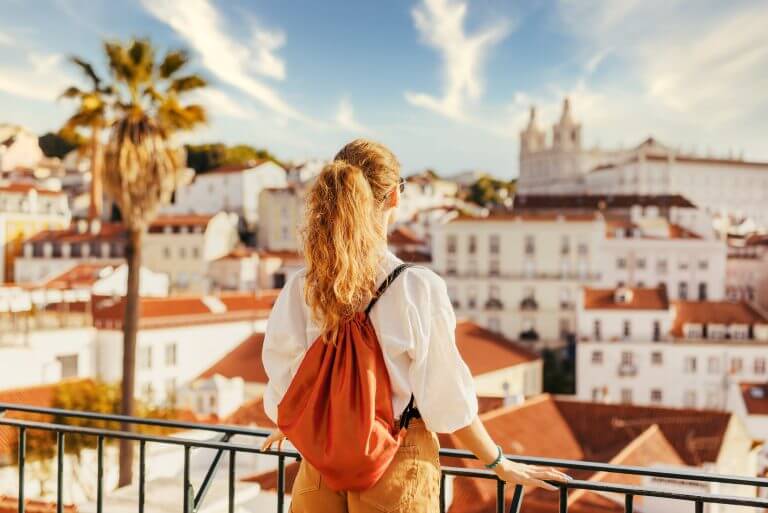
Lisbon is a city where Portuguese saudade is tightly intertwined with Belarusian žurba — and how can one translate words carved into the hearts of generations?
Here, April 25 is a real holiday, like our March 25 — a celebration with so much meaning that sometimes it is hard to explain its importance to someone unfamiliar with it, as if there simply aren’t enough words.
In this city, the Belarusian experience finds unexpected reflections at almost every turn, which means that visiting it is definitely a must.
You can experience all this on your own. But it is better with a guide who knows the city from the inside. And we have tried to show this through the example of one of our many compatriots who have fallen in love with Lisbon.
My Portugal Moments is a travel company founded by Belarusians who also live in Lisbon. For them, Portugal has become not merely a tourist destination but a new starting point in life. They know where to find the best pastel de nata and what that alley over there is called, why it matters and what you need to know about it.
But most importantly, they understand and see the city not as a backdrop for beautiful photos, but as a place full of meaning. So, in short, come on in:
🔹Website: https://myportugalmoments.pt
🔸Facebook: https://www.facebook.com/myportugalmoments/
🔸Instagram: https://www.instagram.com/myportugalmoments
🔸TikTok: https://www.tiktok.com/@myportugalmoments
🔸LinkedIn: https://linkedin.com/company/my-portugal-moments
🔸YouTube: https://www.youtube.com/@MyPortugalMoments
* Sponsored content