The material is available only to
POZIRK+Cichanoŭski’s reform proposal is a hard sell
The material is available only to
POZIRK+
Alaksandar Łukašenka used a softer version of his trademark anti-American rhetoric at the Shanghai Cooperation Organization (SCO) summit in Bishkek on September 1, as he looks forward to a visit by US Envoy John Coale expected in Minsk later this month.
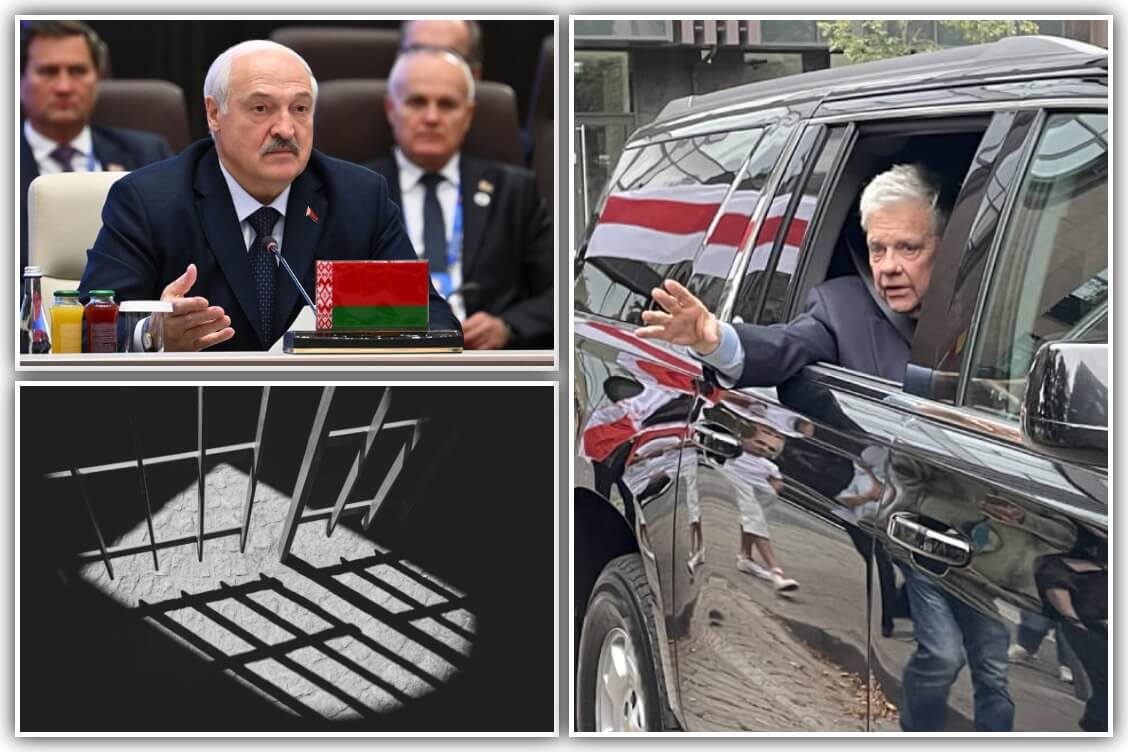
The Belarusian ruler accused unspecified “powers that be” of employing “direct, full-scale military aggression,” in addition to color revolutions and hybrid influence. Clearly, his criticism was not directed at Russia, as Russian President Vladimir Putin was attending the session.
The Belarusian leader seized the opportunity to urge Beijing, New Delhi and Moscow to do more to shape a multipolar world order.
In an interview with Nomad TV, he noted that SCO members have a huge population and colossal resources but have taken “few specific actions.”
He expressed dismay at the SCO’s lack of response to economic sanctions against its members, tariffs and the recent military campaign against Iran, without naming the United States as responsible for any of these actions.
He said he wished that “no one in the world could make a move without a nod of approval” from the SCO.
Łukašenka criticized the United States without mentioning it by name because he is interested in maintaining engagement with Washington. Coale said several days ago that he planned to visit Minsk in mid-September to secure the release of a new group of 200–300 political prisoners.
Belarus has nearly 900 documented political prisoners at present. Donald Trump’s team has said it seeks the release of all of them. Therefore, Coale’s September visit is unlikely to be his last.
Łukašenka advocates a multipolar world order because he sees democracy and human rights as unnecessary, or even as a major challenge to authoritarian regimes. The West has condemned him for human rights abuses throughout his more than 30 years in power. Other global powers that are supposed to counterbalance the United States, including China, never criticize him for election rigging and political repression.
He feels comfortable and respected at events dominated by Global South countries, where he can even criticize major world leaders.
For instance, at this SCO summit, while criticizing China, India and Russia for not being proactive enough, he said, “If we waste our time, we can become the United Nation as it is now.” The jab was directed at UN Secretary-General Antonio Guterres, who was present at the summit.
Such events provide plenty of material for pro-Łukašenka propaganda. State media portray him as a major global player.
But the SCO has limited influence, and its members are divided by major political and geopolitical differences. Communist China and democratic India remain at odds, while India has long been in conflict with Pakistan. Moscow, meanwhile, is increasingly dependent on China.
It is difficult to expect a cohesive policy from an organization with so many contradictions.
The Belarusian ruler seeks a meaningful counterweight to Moscow and greater room for maneuver on the international stage in order to mitigate the impact of Western sanctions. So far, China has fallen short of his expectations as a counterweight to Russia.
Meanwhile, Łukašenka’s and Putin’s interests diverge. In light of CIA Director John Ratcliffe’s recent visit to Moscow, observers are wondering whether his mission was to warn Russia against an escalation in the region amid Ukrainian intelligence reports that the Kremlin is contemplating an attack on a NATO country.
Łukašenka is not particularly enthusiastic about Russia using Belarus for an attack on Ukraine or a NATO ally. Kyiv has already warned him against providing support for the Russian war effort. The Belarusian ruler is reluctant to participate in any Russian operation against a NATO country.
Moreover, he is probably also thinking about mending ties with Europe in order to have potash sanctions lifted or eased. After all, shipping potash fertilizers to China through the Lithuanian port of Klaipėda is more profitable than sending the crop nutrients by freight train through Russia.
To secure licensed spare parts for his Boeing, he had to engage with US President Donald Trump. A multipolar order, therefore, would not completely relieve him of the need to maintain relations with the West and make concessions to it.
Minsk is now hoping that Washington will put pressure on the European Union to ease sanctions on Belarus. One Belarusian state media host said on a recent talk show that it would take a single phone call from Washington to force Lithuania to lift its potash transit ban.
Moreover, the Belarusian ruler is eager to attend another summit — that of the Board of Peace formed by Trump. He joined the board in January but was not present at its first meeting.
Russia has not joined it, and Moscow may resent Łukašenka’s participation in US-led initiatives.
The Belarusian ruler hopes that “no one in the world could make a move without a nod of approval” from the SCO. In reality, however, he is finding it increasingly difficult to make a move without Moscow’s approval.