The material is available only to
POZIRK+Belarusians a major source of foreign currency supply as dollar's role deminishes
The material is available only to
POZIRK+
Andrej Pačobut (Andrzej Poczobut), an exiled Belarusian journalist and prominent Polish minority activist, braved the risk of renewed imprisonment by traveling to Belarus on September 8, challenging Alaksandar Łukašenka’s tactic of banishing his opponents and critics from the country.
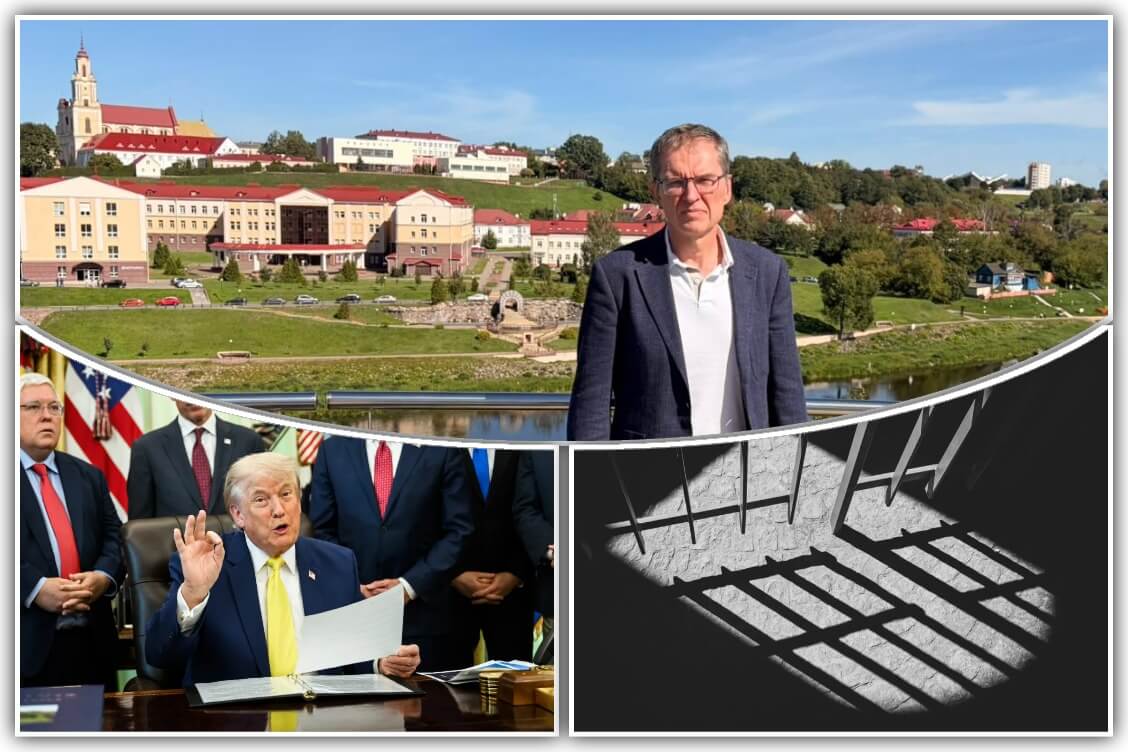
Pačobut has been at odds with the Belarusian ruler for decades. In 2011, he received a three-year suspended sentence for calling Łukašenka a dictator.
One year later, he was arrested over his articles, but investigators eventually dropped the charges. In February 2023, he was sentenced to eight years in prison amid a ruthless crackdown on dissent in the country.
Officials repeatedly offered him release on condition that he admit his guilt and write a request to Łukašenka for a pardon. He refused.
He was released without submitting a pardon request early this past spring in a complicated prisoner exchange mediated by Washington. Moreover, he agreed to leave prison only after officials promised not to prevent him from returning to Belarus from Poland. He proved a really tough nut for the authorities to crack.
In Poland, senior police officials advised him against returning to Belarus, citing the risk of a new arrest.
Pačobut has always said that he would return despite the risk. He was the second activist to do so after Mikałaj Statkievič, who resisted his expulsion to Lithuania last September and was rearrested and returned to prison. Statkievič was released early, but only after suffering a stroke. He paid a high price for freedom and for remaining unbroken.
Pačobut went to Belarus several days after receiving the blessing of Pope Leo XIV at the Vatican. This provides a degree of security, as Minsk has been seeking to maintain good relations with the Vatican.
It has also sought to improve ties with Warsaw and Washington in an effort to break the regime’s isolation from the West. Notably, Poland reported a sharp decline this year in the number of third-country migrants crossing its border from Belarus.
Pačobut also timed his visit to coincide with a planned trip to Belarus by US Special Envoy John Coale. The US diplomat said he hoped to secure the release of around 300 political prisoners as part of a “grand bargain” being negotiated by Minsk and Washington. Łukašenka would not want to arrest Pačobut shortly before his meeting with Coale for fear that the deal could collapse. It should also be noted that US President Donald Trump issued a special statement welcoming Pačobut’s release.
Pačobut crossed the border into Belarus unhindered because of the circumstances described above. But risks remain.
He said he was traveling on business to take part in activities of the Union of Poles in Belarus (UPB), an outlawed association at odds with the authorities in Minsk.
UPB leader Andżelika Borys said recently that she had received “signals” that there might be an opportunity to legalize the UPB.
She did not elaborate, but any such signals would likely have come from the Belarusian authorities. Registration of the UPB would be a major concession by Minsk to Warsaw. It is unclear what Minsk would expect in exchange.
Pačobut’s release is evidence that Minsk is interested in pursuing the Polish track. However, Łukašenka would be entering dangerous territory. Regime hawks, particularly the law enforcement and security establishment, may be deeply upset and alarmed by major concessions to Warsaw.
Łukašenka has already taken pains to explain to his stalwarts that releasing political prisoners does not pose a major threat to the system and that it would be better to free them as part of a bargain with the West than have them die in prison.
On the other hand, he and his security brass remain wary of restoring opponents to their rights, fearing a new uprising after the tumultuous events of 2020.
Pačobut has undertaken a risky mission to push the boundaries of what is possible as the regime seeks to ease tensions with the West. But it is difficult to predict how his gamble will play out.
Opponents fear that the regime may use his visit to create a false impression that the country is safe for people with different political views and thereby push for an easing of sanctions.