Belarus is ready to ship potash fertilizers to the United States and cooperate with Washington on nuclear security, Alaksandar Łukašenka said on September 11, days before US Special Envoy John Coale’s visit to Minsk.
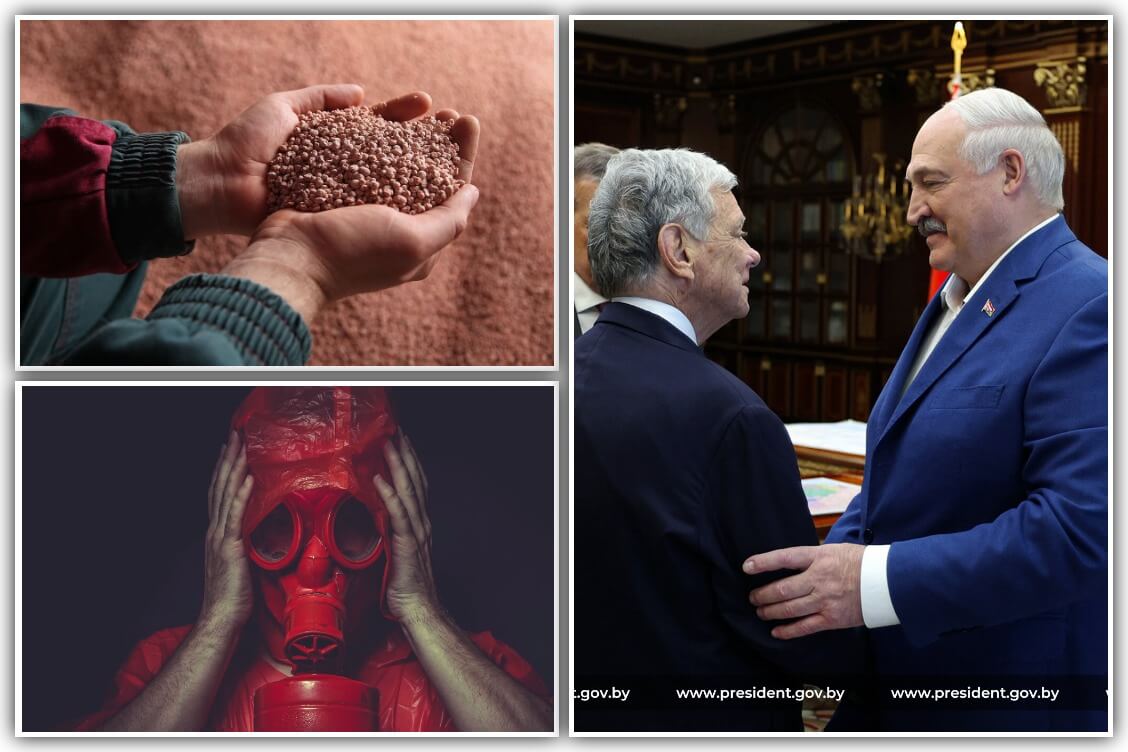
Ship is being loaded
“We are open. They have lifted a number of sanctions from our enterprises and are ready to lift more. There are plenty of questions. The embassies. Let’s discuss how to resume [their operation]. Nuclear materials and other matters — there is a whole program in our country, please [let’s talk about it]. You want to buy potash fertilizers from us? If you want, please do,” the Belarusian leader told state media journalists at the Abuz-Liasnoŭski training ground near Baranavičy in the Brest region.
He made it clear that Belarus was already loading fertilizers for shipment to the United States.
The United States currently imports 85 percent of its fertilizers from Canada, and Washington appears interested in diversifying its suppliers amid a trade war with its neighbor.
Łukašenka is looking to seize the opportunity.
In December 2025, he said he had offered Americans the state potash mining company AAT Netry Nežyn for $3 billion. However, the company was reportedly considered a problem asset and the price was deemed too high. US businesses might nevertheless be interested in investing in the industry.
Moreover, in March, Coale told LRT that Washington would like Lithuania to resume the transshipment of Belarusian potash fertilizers so that they could be supplied to Europe and the United States.
In May, the US Department of State sent letters to Vilnius, Warsaw and Kyiv asking them to consider allowing Belarusian fertilizer transit.
No deal has been reached so far. Kyiv rejected the proposal, branding Belarus a co-aggressor.
Ukrainian grain and Belarusian fertilizers
Before 2022, Belarus shipped its fertilizers to customers via the Lithuanian port of Klaipėda. This was the shortest and most cost-effective route.
After the European Union imposed sanctions on Belarus, the country began shipping its fertilizers through the Russian ports of Ust-Luga and Saint Petersburg.
The ship that Łukašenka said was being loaded was probably at one of these ports. The shipment is most likely a trial balloon, with Washington likely to continue pressing Lithuania to allow fertilizer transit.
Ihor Tyshkevich, a Ukrainian political analyst, noted that since Ukraine’s grain exports via the Black Sea have been disrupted by the war, Kyiv may consider transit through Lithuania or Latvia. This route would involve Belarus as a transit country.
Łukašenka might seek to take advantage of Kyiv’s interest in grain shipments.
“Latvian and Lithuanian politicians say that this [Belarusian potash fertilizer transit] would not be a concession to the dictator but a desire to help Ukraine. The United States would get what it wanted and would be able to think of one-year contracts or equity investment in [Belarus’] potash industry,” he said.
The idea seems fanciful. But who knows? After all, few would have expected US President Donald Trump to phone Łukašenka, send him presents and call him a “deeply respected president.”
Nuclear program
By “nuclear materials,” the Belarusian ruler most likely referred to weapons-grade uranium remaining in Belarus after the collapse of the Soviet Union.
The Iskra site of the Belarusian Nuclear Energy Institute, now known as Sosny, developed and tested the mobile nuclear power plant Pamir-630D in 1985-87. Nuclear materials have remained at the site since then.
“I will not hide that we have been left highly-enriched uranium, hundreds of kilograms of actually weapons grade and less enriched uranium,” Łukašenka said in April 2010, after he had not been invited to a global nuclear security summit in Washington.
He added that he was open to negotiations on how to dispose of it.
On December 1, 2010, Belarusian Foreign Minister Siarhiej Martynaŭ and US Secretary of State Hillary Clinton signed a joint statement committing Belarus to dispose of its nuclear stockpiles before the next nuclear security summit, scheduled for 2012. Washington pledged technical and financial assistance.
The deal fell through, however, after the Belarusian government brutally dispersed an opposition protest against election fraud on December 19, 2010. Hundreds of demonstrators and several presidential candidates were arrested. The crackdown led to tensions between Belarus and the West, and Minsk froze implementation of the agreement.
Before that, 88.7 kilograms of weapons-grade uranium had been taken to Russia. The Nuclear Threat Initiative said in September 2024 that around 100 kilograms of weapons-grade uranium might remain in Belarus.
The Nuclear Weapons Ban Monitor said in 2026 that Belarus might store between 100 and 1,000 kilograms of weapons-grade uranium. No efforts have been reported to remove the stockpiles from the country.
Washington has consistently sought to reduce stockpiles of weapons-grade uranium at civilian sites. It views Belarus as unfinished business.
Washington’s interest in Belarusian fertilizers and nuclear materials could give Łukašenka additional leverage in negotiations with the United States. But these are not his only bargaining chips. The Belarusian leader has also made the release of political prisoners a key part of his dealings with Washington.
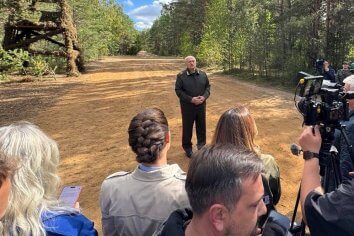
Łukašenka says he is looking forward to meeting Coale, open to “small and grand bargains” (Updated)
September 11, Pozirk. Alaksandar Łukašenka has said he is looking forward to meeting US Special Envoy John Coale in Minsk and is open to business deals with the United States, including shipments of Belarusian potash fertilizers. “I have said already …