The material is available only to
POZIRK+Poverty: Lithuania calls to action, Belarus makes numbers shine
The material is available only to
POZIRK+
Siarhiej Cichanoŭski, a former presidential candidate in 2020 known for his punchy anti-Łukašenka slogan “Stop the Cockroach!”, has turned out to be a divisive figure for the opposition since his release in June 2025 as part of the first large group of political prisoners freed with Washington’s assistance. His release and subsequent attacks on the opposition camp may have been a calculated move by the regime’s security services.
Belarusian leader Alaksandar Łukašenka told Time Magazine shortly after releasing Cichanoŭski that the United States had not asked him to free his former rival and the husband of opposition leader Śviatłana Cichanoŭskaja, stressing: “It was my decision.”
Łukašenka presented his move as an act of humanism, noting that Cichanoŭskaja wanted her family to be reunited. “There’s a family there, children, two little kids,” he said, adding: “But now I see that you, the West, are unhappy. And the fugitives are especially unhappy that I let him go.”
Indeed, by the time Łukašenka gave that interview to Time Magazine, Cichanoŭski had already been making headlines.
At a rally following his release, he vowed: “I will break this regime.” He then announced plans to deliver a “powerful blow to Łukašism and its propaganda” within three weeks, asking for €200,000 in donations. Just a couple of days later, he lashed out at Belarusians for not donating enough to his cause.
In early July last year, he admitted that the security services had tried to recruit him while he was behind bars. “They expected me to break up, to split the opposition here. They told me that [Pavieł] Łatuška drinks, that Śviatłana does this, that Franak Viačorka does that…” He said he had later laughed about it in his cell, thinking “what fools they [the security services] are.”
Yet, whether at the KGB’s behest or unintentionally, he has become a rallying point for opposition activists dissatisfied with the way things work in his wife’s camp.
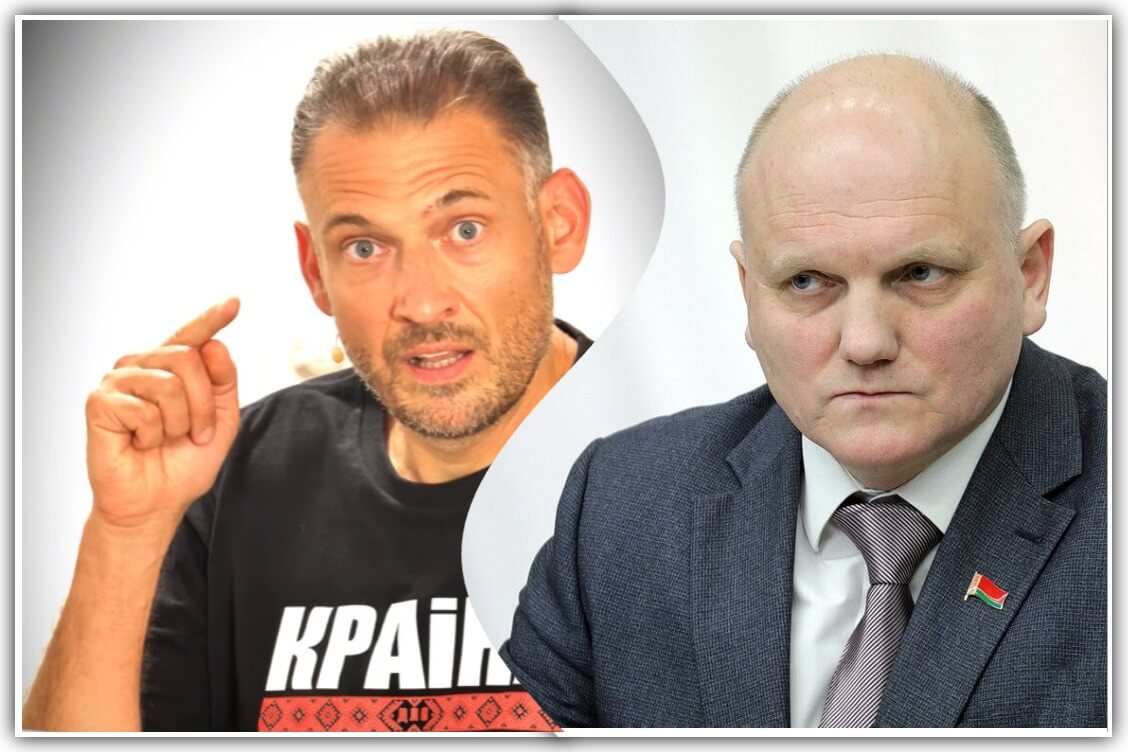
KGB chief Ivan Tertel has been involved in negotiations with the Americans. According to informed sources, the KGB has considerable influence over the list of prisoners released in each round.
In the first few weeks after Cichanoŭski’s release, it seemed that he had not fulfilled the KGB’s apparent expectation that his ambition and high-handed style would sow discord within the opposition.
He declared that he intended to be the “first gentleman,” acknowledging his wife as the leader because she claimed victory in the 2020 presidential election.
But soon afterward, tensions between him and Cichanoŭskaja’s office came to the surface. I will not examine the reasons for this clash here, as political motives have become intertwined with personal ones, making it a delicate matter.
In September last year, during a meeting with Belarusians in New York, he was somewhat assertive toward his wife and criticized her chief adviser, Franak Viačorka.
Later, he retreated into the background as he struggled to come to terms with a new political reality, in which he was no longer the main character. He tried his hand at political theory, writing several articles about the Finlandization of Belarus, but received poor reviews from experts.
Eventually, Cichanoŭski, who had moved to the United States, began reading poems and fairy tales on his YouTube channel. During a period of political limbo, he seemed to have found a new outlet for self-expression.
In August this year, Cichanoŭski, himself a popular blogger, launched an all-out offensive against Belarusian independent media outlets in exile.
He accused Nasha Niva of exaggerating the scale of his birthday celebrations by claiming that he had thrown a party “in a grand style.”
The issue hardly seemed worth making a fuss about. If he objected to the wording, he could have asked the newspaper to change the headline or publish a correction. He could also have taken the matter to court.
Instead, Cichanoŭski announced that he would compile dossiers on what he called “tabloid” media outlets and send them to their donors, urging them to consider whether these publications deserved continued funding.
The attack on Nasha Niva was followed by a campaign against other media outlets and individual journalists. Cichanoŭski and his supporters claim that these outlets serve the interests of the office headed by his wife.
Cichanoŭski and his supporters have used abusive language against journalists, calling them “clowns,” “scum” and worse.
I, too, have been targeted by this crowd for defending independent media.
In a livestream a few days ago, Cichanoŭski repeatedly referred to the 2015 Islamist attack on the French satirical magazine Charlie Hebdo, in which 12 people were killed and 11 injured.
The blogger claimed to know people prepared to deal with the Belarusian “tabloid” press in a similar manner.
A couple of days later, Pozirk received an anonymous email threatening me personally.
The sender presumably sought to conceal their identity by using Atomic Mail, a service that does not disclose the sender’s IP address in outgoing email headers.
Whoever is behind the threat, two points need to be made.
First, through his social media campaign, Cichanoŭski is, wittingly or unwittingly, inciting hatred against independent media and his wife’s office, encouraging fringe figures to attack them.
Second, this campaign creates fertile ground for the regime’s security services, which seek to intimidate pro-democracy media outlets forced into exile but still carrying out their mission.
If the security services advised Łukašenka to release Cichanoŭski, whose wife disputed the official results and claimed victory in the 2020 election, in the hope of producing this effect, General Tertel can rub his hands with satisfaction.
Regardless of his motives, Cichanoŭski is effectively fueling infighting among the regime’s opponents.