The material is available only to
POZIRK+Belarusian potash for Trump: Minsk-Washington talks are stalling
The material is available only to
POZIRK+
Alaksandar Łukašenka has appointed yet another general to put things in order in civilian life, naming retired Maj. Gen. Pavieł Muraviejka chairman of the Viciebsk Regional Executive Committee.
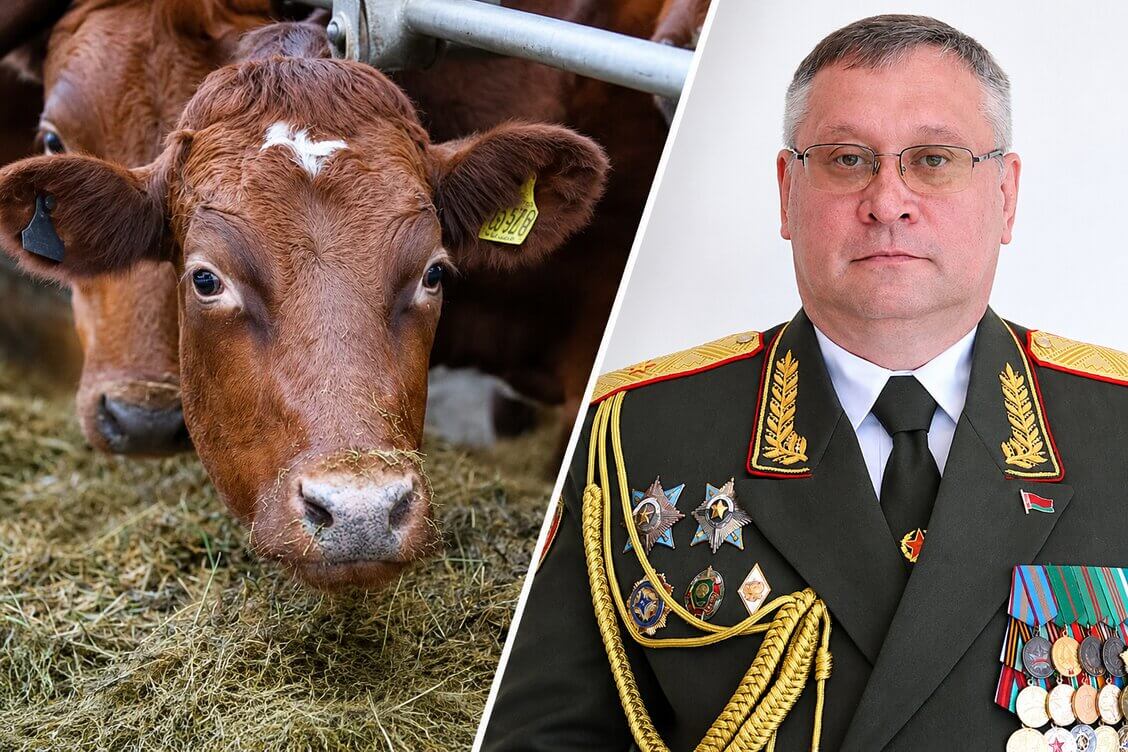
The general’s career has taken some sharp turns over the past six weeks. In late September, Muraviejka was appointed deputy head of Łukašenka’s administration, only to be sent to govern a chronically struggling region.
When appointing Muraviejka to his administration in September, Łukašenka said that, “as president and commander-in-chief,” he considered it important to have several alternative points of view “on the situation in our security units.”
Observers speculated that the Belarusian ruler might have lost confidence in Defense Minister Viktar Chrenin or that Moscow had planted its protégé in the administration as it prepared to attack NATO.
Neither theory has been substantiated. Perhaps Łukašenka simply changed his mind about the need for alternative perspectives on defense and security. Or perhaps he could not find anyone else willing to take charge of the economically backward eastern region after Alaksandar Rahožnik stepped down last month for health reasons.
Łukašenka has frequently chastised the region’s leadership for poor performance. In October, for example, he described its condition as “grave,” noting that it was doing worse than “anyone else.”
“We will not drag them on our shoulders. If you want to live and work, start digging in,” he said.
The region is known for its colder climate, high livestock mortality and low population density. Perhaps it has simply been unlucky in its leaders, all appointed by the Belarusian ruler.
Łukašenka is convinced that the region is struggling because of poor discipline. “It is necessary to introduce army discipline in terms of compliance with technological regulations,” he said, explaining why he had chosen a general for the job.
Muraviejka is notorious for threatening three years ago to carve out a “vital corridor” through Lithuania “by force of arms.” This was apparently a reference to the Suwałki Gap, which separates Belarus from Russia’s exclave of Kaliningrad on the Baltic Sea.
“Lithuania has practically forbidden us to transport our goods across the border. Under international law, this step constitutes economic aggression,” he said on October 24, 2023. “From the point of view of simple logic, we have all grounds to carve out a vital corridor by force of arms.”
Now, Łukašenka stressed that the general must put his energy to use to fix problems in agriculture.
The Belarusian strongman did not explain why he had removed Muraviejka from his administration but portrayed his appointment to Viciebsk as a brilliant move.
“Why am I offering you this job out of all the candidates? You are a man of the system, with a military character, someone who is used to setting tasks and demanding that they be fulfilled,” he said.
“You know, there are no incompetent people in the General Staff; those people have brains,” he added.
He expressed hope that Muraviejka would take up the challenge with enthusiasm.
“Discipline” is arguably the most popular word in the Belarusian leader’s vocabulary. This explains why he places so much trust in military personnel, appointing former officers to civilian positions.
Generals Viktar Šejman, Hiennadz Niavyhłas and Ihar Sierhiajenka have headed his presidential administration. The late Uładzimir Makiej was also a reserve colonel.
Col. Siarhiej Kavalčuk, a former presidential security officer who graduated from an artillery school, has served as sports minister since 2018. Gen. Juryj Karajeŭ, a former interior minister, is now in charge of the Hrodna region.
Raman Hałoŭčanka, head of the National Bank of Belarus, has an extensive background in the defense industry. Many police, KGB and military officers also serve in local governments.
This reliance on military personnel is characteristic of Łukašenka’s authoritarian regime. He values their unquestioning obedience.
However, Muraviejka faces a formidable challenge that could ruin his career. He has promised to rely on “military management,” but will that help turn around the struggling region?
The economy is too complex for its problems to be solved through military orders. But Łukašenka believes that the command system can work miracles. Will the region’s cows march in formation under Muraviejka’s command?