Swiss court gives alleged death squad member Haraŭski two-year suspended sentence
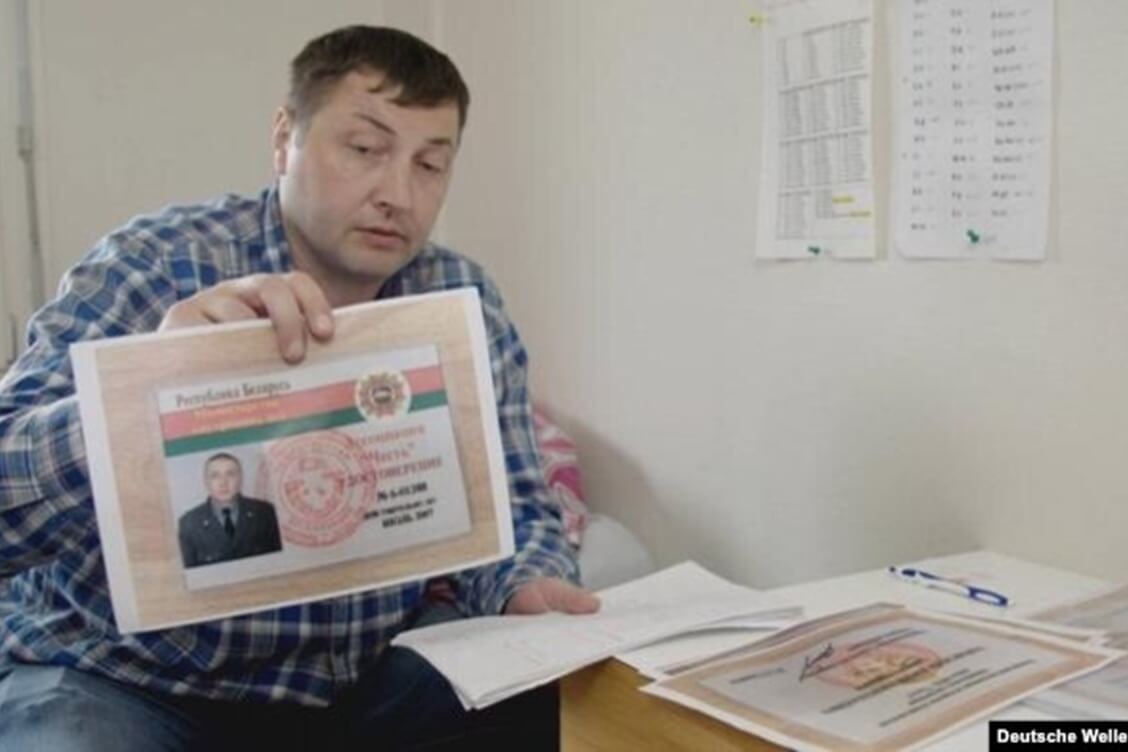
Juryj Haraŭski
October 26, Pozirk. A court in Switzerland’s St Gallen has handed Juryj Haraŭski, a former elite police officer who claimed involvement in the abduction and murder of Belarusian opposition figures, a two-year suspended prison sentence, Novy Čas reported.
After being fully acquitted at his first trial, Haraŭski was found guilty on appeal of kidnapping businessman Anatol Krasoŭski in 1999 but acquitted of a similar charge involving former Interior Minister Juryj Zacharanka.
At the September 22 appeal hearing, Haraŭski said that Alaksandar Łukašenka and Viktar Šejman, a former head of Belarus’ Security Council, had ordered the abductions. He was reluctant to provide further details about the disappearances and refused to answer questions from the victims’ lawyer. He also declined to make a closing statement, according to a courtroom report.
Haraŭski, who admitted to being a member of a government-run death squad that allegedly abducted and killed Łukašenka’s opponents in 1999, was fully acquitted at his first trial in September 2023. At the time, the judge concluded that Haraŭski might have been involved in the crimes, but that his role had not been established.
Swiss law did not allow prosecutors to charge the former police officer with more serious offenses, such as murder or complicity in murder, because the alleged crimes were committed in Belarus. He was instead charged with enforced disappearance.
Relatives of the disappeared appealed the acquittal, seeking a guilty verdict.
In 2019, media reported that Haraŭski had admitted to being a member of a government-run death squad that allegedly abducted and killed Zacharanka, Krasoŭski and opposition politician Viktar Hančar in 1999.
Haraŭski apologized to the relatives and friends of the alleged victims. He said he hoped to receive “fair punishment,” adding that a harsh sentence could discourage others from coming forward with confessions about crimes committed by the Belarusian authorities.
In 2001, Christos Pourgourides, rapporteur of the Council of Europe Parliamentary Assembly Committee on Legal Affairs and Human Rights, concluded after visiting Belarus that “steps were taken at the highest level of the state to actively cover up the true background of the disappearances.” Evidence suggested that “senior officials of the state may themselves be involved in these disappearances,” it said.
The Haraŭski trial was important in itself because Belarusian investigators have never established the fact of the murder. Belarusian investigators admitted that the opposition figures had vanished, but said they did not know what had happened to them.
On September 16, 1999, the former head of the central election commission, Viktar Hančar, and his friend, prominent businessman and public figure Anatol Krasoŭski disappeared in Minsk. They walked out of a bathhouse and got into their car, but it never left the parking lot.
They were presumably abducted and killed by members of a death squad. Broken glass and traces of blood were found at the scene.
In 2000, investigators arrested Dźmitryj Paŭličenka, commander of an elite police unit, in connection with the abduction, but Łukašenka ordered his release. The Belarusian ruler fired the Uladzimir Mackievič as chief of the Committee for State Security (KGB) and Aleh Bažełka as prosecutor general to put the investigation on hold.
Other opponents who disappeared around the same time were former Interior Minister Juryj Zacharanka in 1999 and journalist Dźmitryj Zavadski in 2000. Łukašenka’s death squad is also suspected of involvement in these crimes.
In 2019, Juryj Haraŭski, a former member of the SOBR unit under Paŭličenka’s command, confessed in an interview with Deutsche Welle to participating in the abductions of Hančar, Krasoŭski and Zacharanka.
He claimed that Paŭličenka executed the abducted men by shooting. Zacharanka’s body was cremated, and Hančar and Krasoŭski were buried at the interior ministry’s training ground, he said.
Haraŭski gave that interview to in exchange for political asylum in Switzerland. Human rights activists initiated his prosecution for “involvement in multiple disappearances.”

Haraŭski acquittal goes to appeal in Switzerland
September 22, Pozirk. A court in Switzerland has opened an appeal trial against the acquittal of Juryj Haraŭski, a former elite police officer suspected of involvement in the abduction and murder of Belarus’ opposition figures, the Viasna Human Rights Center …

Hančar, Krasoŭski disappearance marked Łukašenka's point of no return
Belarus could have held democratic election in 1999. Instead, Alaksandar Łukašenka’s opponents disappeared and their whereabouts are not known. Death squad with unlimited powers to fight opponents On September 16, 1999, the former head of the central election commission, Viktar …