The material is available only to
POZIRK+Trump pressing Lithuania to lift potash transit ban on Belarus, Politico says
The material is available only to
POZIRK+
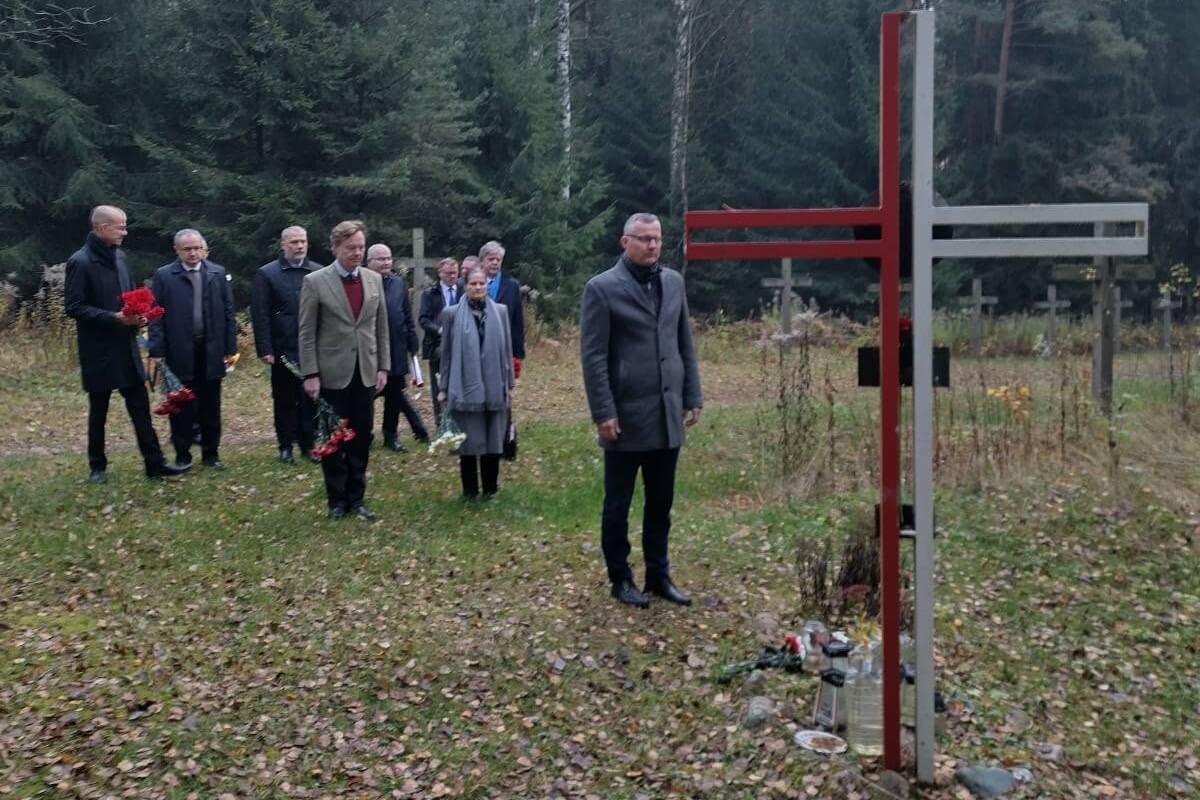
October 30, Pozirk. The head of the Delegation of the European Union to Belarus as well as the heads of the diplomatic missions of EU member states and the United Kingdom visited Kurapaty, a Soviet-era mass execution site just outside of Minsk, on October 30 to pay tribute to the victims of Josef Stalin’s terror.
In a message on its Facebook page, the EU Delegation notes that estimates of the number of people executed at Kurapaty vary and reach over a hundred thousand, with the state archives remaining closed. Archaeologists were able to establish the names of only two of the victims, the Delegation said, a reference to Hrodna residents Mojša Kramier and Mardychaj Šulkies.
The German embassy wrote on Facebook that many members of Belarus’ intellectual elite, including poets and prose writers, were executed in Minsk on the night between October 29 and 30, 1937, by Josef Stalin’s secret police.
“Every year many Belarusians honor the memory of these murdered cultural figures,” the embassy said. “Their memory is also preserved and supported in Germany. On October 29, the Literary Colloquium Berlin hosted the event ‘Night of Unshot Poems 2026: A Meeting with Destroyed Belarusian Literature’. This year’s Night of Unshot Poems was dedicated to the literary clubs that shaped Belarusian literature in the 1920s and 1930s. The event was held in Belarusian, Yiddish, and German.”
On the night of October 29-30, 1937, often described as one of the darkest chapters of Belarusian history in the 20th century, the Soviet interior ministry’s NKVD executed more than 100 Belarusian intellectuals and officials.
Exiled Belarusians and community activists hold commemorative ceremonies, theater performances, poetry readings and other events annually across Europe and in democratic countries around the world at the end of October to mark the so-called Night of the Executed Poets.
Foreign diplomats, who are protected by the 1961 Vienna Convention on Diplomatic Relations, are the only ones who are able to hold commemorate the anniversary inside Belarus without fearing arrest. At the same time, EU diplomatic missions have kept a low profile with very few public events and even fewer interviews in recent years. Western diplomats have been in the crosshairs of the state propaganda with scathing media reports about them and relentless psychological harassment during rare public appearances, including at Kurapaty.