The material is available only to
POZIRK+No new date for Coale’s Minsk visit amid ongoing Belarus talks
The material is available only to
POZIRK+
(a reference to A Christmas Carol by Charles Dickens, where the main character is visited by three spirits: of the past, the present and the future)
by Stanislav Krasulin, a MSc in physics
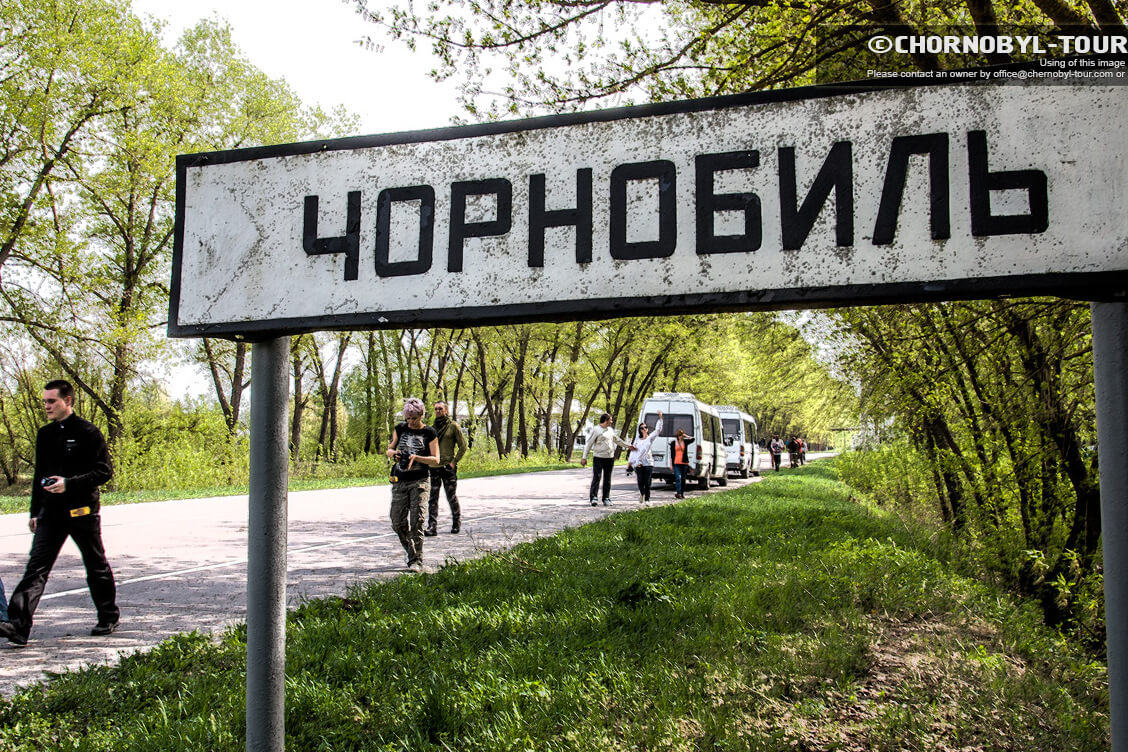
As conflict-caused disruptions and environmental considerations push our society to look for an alternative to fossil fuels, more voices advocate for nuclear power, and this shift is especially prominent online. But before the voices from under the bridge convince you that nuclear power is cheapest and safest, let me point out that this Sunday marks 40 years since the Chernobyl disaster. And as this grim anniversary is approaching, you will be visited by three spirits.
First, I invite you to contemplate the past, namely, the damage that Chernobyl has caused. After all, you need to know that to understand how much nuclear power actually costs.
When assessing damage from a large-scale disaster, the picture can change drastically simply depending on the chosen metrics. And as far as the Chernobyl disaster is concerned, officials choose metrics that does not fully reflect the full cost of the plant. For example, the official immediate death toll of around sixty people does not seem large. And if you consider approximately 350,000 of resettled people, the word “resettled” might imply that the problem had been solved – no harm done then, right?
But that’s hundreds of thousands of people who have not just lost their houses and belongings; they also lost the land they used to call their home. They cannot come back and rebuild. They cannot even visit the graves of their relatives that are buried on contaminated territories. And it’s permanent. Unlike war or political refugees, they cannot hope for a cessation of hostilities or a regime change that would let them go back. No one has the power to reclaim most of the land contaminated with radioactive substances. How can you properly account the suffering of these people when calculating the damage from the nuclear catastrophe?
Similarly, how can you calculate the damage of estimated several thousand cases of thyroid cancer in children that were caused by the fallout? Thyroid cancer is usually treatable, so, thankfully, those children have mostly survived. But does that mean that the pain and suffering they and their families had endured, their scars and their need for lifelong medication all shouldn’t be counted as the damage from Chernobyl disaster, as the cost of nuclear power?
As for the people who have had the misfortune of ending up on the death toll, their number cannot be accurately estimated either. Theoretically, there should be an option of comparing the fatalities from cancer and other radioactivity-related causes in affected and unaffected territories, and using that to assess the indirect death toll.
It was the territory of Belarus that took the brunt of the disaster’s nuclear fallout (up to 60 percent of the released radioactive substances that fell on the Soviet Union). Belarus has been ruled by the regime of Alaksandar Łukašenka since 1994. The regime builds its ideology on Soviet nostalgia and its economy on handouts from Russia. A new Russian-built nuclear power plant in Astraviec is one of Łukašenka’s passion projects. Even the simple fact that the government is supposed to pay some compensation to the victims of the disaster encourages Łukašenka to downplay the damage from the radioactive contamination.
If you don’t believe that Łukašenka can sweep human lives under the rug for his own political ends, let’s take a look at something a bit more recent – the coronavirus pandemic. Officially, Belarus reported one of the lowest mortality rates in Europe, only worse than Norway and several countries with smaller populations. It was not achieved by lockdowns, or strict social distancing rules, or at least a comprehensive awareness campaign. Quite the contrary, Łukašenka advised people to work in the fields, drive tractors or play ice hockey as a remedy for the coronavirus. The government continued to hold mass events and parades. To mask the strategy’s failure, officials just fabricated reports on mortality, as numerous leaks suggest. On certain days a single hospital’s death toll was about the same as the one reported for the country. Doctors and journalists who spoke about the true numbers were fired and jailed, while Biełstat, the national statistics bureau, refused to publish annual mortality data without explanation. Data from later leaks suggests that coronavirus mortality could be up to 17 times higher than officially reported, making it Europe’s worst.
So, if Łukašenka lied and directed others to lie to hide the true impact and number of victims of the coronavirus pandemic because it suited his political interests, what are the chances that he is honest about the impact of the Chernobyl disaster? How many victims of Chernobyl remain uncounted so that he can protect his power and his wallet?
But there are also uncounted victims much farther away from the exploded power plant. Far from all of the contamination that fell on the Soviet Union, the radioactive fallout also contaminated forests in Germany, mountains in Norway and fields in the United Kingdom. It was only in 2012 that the last Chernobyl disaster-related restrictions on sheep grazing were lifted in Wales. Of course, the costs and troubles that British farmers went through were incomparable to those related to cancer-stricken children. But does that mean that they should be entirely disregarded when calculating the damage from the Chernobyl disaster?
And worse still, what if someone, somewhere, either through negligence or malice, let dangerously contaminated produce make it to the dinner table, resulting in more cancer cases, more deaths? Sadly, this is not just a hypothetical question. In Ireland, radioactive caesium and strontium had contaminated feed for cows, resulting in thousands of tons of radioactive milk. But, rather than dispose of it, the Irish Dairy Board had managed to pass the costs onward by selling it in powdered form to Mexico, where officials, who were aware of the contamination, tried to minimize the effects by spreading the sales of the affected milk over as large a territory as possible. As a result, it is now yet again impossible to accurately estimate the number of people affected, the number of cancers caused. Oncologists in Mexico registered as much as a four-fold increase in childhood cancers in the decade that followed. So, even distances as large as ten thousand kilometres do not guarantee safety from a nuclear disaster.
But maybe four decades can offer safety? Maybe Chernobyl’s damage is in the past and can no longer hurt you? Well, await tomorrow for the spirit of Chernobyl’s present.
This is an opinion essay. The views of the author are not necessarily shared by Pozirk’s editorial team.