The material is available only to
POZIRK+Cichanoŭski’s reform proposal is a hard sell
The material is available only to
POZIRK+
(a reference to A Christmas Carol by Charles Dickens, where the main character is visited by three spirits: of the past, the present and the future)
by Stanislav Krasulin, a MSc in physics
Even if we assume that a new nuclear disaster is impossible, there still remains a danger to consider: the more your future relies on nuclear power, the more nuclear waste it holds. Waste, that will remain dangerous for at least tens of thousands of years (and some types of waste for millions). Assurances that the problem of safely containing it for such a long period has already been solved seem overoptimistic, given that at, say, Waste Isolation Pilot Plant (radioactive waste storage facility in New Mexico) an explosion and radioactive leak requiring an evacuation and a clean-up operation occurred in 2014, just 15 years after it started to store waste.
Similar scepticism is elicited when concepts of radioactive waste containers are presented with claims that they are guaranteed to safely hold the waste for the required number of thousands of years. With an impossibility of a real-life test of such a duration these guarantees are merely predictions. Predictions, that might not come true. Consider the recent Artemis II mission, which had suffered a delay when the heat shield of the Orion spacecraft had demonstrated greater than anticipated erosion during the previous flight. In other words, the best minds on Earth have done the calculations, run the simulations, made the predictions, and then reality proved them wrong. There are no guarantees that the calculations and predictions of the radioactive waste container makers are correct. And even if they are true for the shiny container on exhibition, will they still be true for the real things mass-produced by the lowest bidder? It is safe to say that the issue of radioactive waste management is far from solved.
But is the assumption that there can never be another nuclear catastrophe true? Is nuclear power actually safe, warm and fuzzy, and simply had a misfortune of a terrible, but unique accident unfairly tainting its reputation? In order to predict what we can expect from it in the future let’s take a glimpse at its past.
The deaths of some early researchers, like Marie Curie, can be chalked up to a lack of knowledge; this is, indeed, not uncommon for newly discovered phenomena. But there is no such excuse in case of Harry Daghlian, who knew perfectly well the dangers of a sphere of plutonium that he was conducting experiments on in Los Alamos in 1945. The knowledge, however, did not protect him from making a mistake: he simply dropped one of the installation parts onto the sphere, bringing the mass to criticality. What followed was a bright blue flash and the scientist’s death from acute radiation sickness.
About a year later Louis Slotin was conducting experiments with the same plutonium. And when he repeatedly shunned specially designed shims and used instead the tip of a screwdriver to hold apart two halves of the sphere’s casing he did so specifically because he knew about the danger – it was a form of thrill-seeking. During one of the experiments the tip slipped, there was a bright flash of blue light, and several people have died as a result. Another fatal accident happened in Vinča, Yugoslavia in 1958. Same year, another fatality in Los Alamos. An explosion of SL-1 reactor in 1961, three people dead. Another fatal accident in Wood River Junction, 1964; another in Mayak, USSR, 1968; and more, and more… The story of nuclear power quickly becomes a blur of bright blue flashes and dead people.
These accidents have happened for a variety of highly complex scientific and technical reasons, but the underlying cause has been the same: nuclear-power related equipment is designed, built and operated by humans, and humans make mistakes. Yes, trust me, those who work with nuclear power are only humans. About the time when the Astraviec nuclear power plant construction began, Belarusian State University had introduced a nuclear power-related major to prepare the necessary personnel. I knew some of the students personally, and, well, they were exactly the same as all the other students. Same slacking off, same heavy drinking, same prayers before the final exam. Even though titles like “nuclear scientist” or “nuclear engineer” inspire immense respect and make their holders appear almost superhuman, just like you and me they can make a mistake; they can be hungover from a yesterday’s celebration or depressed because of a personal issue; they can even be straight up incompetent; but, perhaps worst of all, they can be complacent. If all of the failsafe devices and safety procedures succeed in preventing disasters for long enough, then the workers might start to believe that a disaster is genuinely impossible, just like the night shift of the fourth reactor of the Chernobyl power plant did not believe that their reactor could explode. And when a disaster is impossible failsafe devices are removed to save costs, safety procedures are ignored to speed things up, until, inevitably, the next random mistake becomes critical, leading to a new catastrophe.
At the same time, mistakes can also be drastically increased by unfavorable external factors, and since nuclear power is an industry, it features the usual problems: reputational risks, profit considerations, time constraints. In 1986, the operators of the Chernobyl plant were in a rush to finish testing before a deadline, you know how it went. In 1999 three technicians at a Japanese nuclear fuel conversion facility were under pressure to meet shipping requirements and to speed up the work. They failed to follow the officially approved procedure; after all, there hadn’t been an incident at that facility in the 15 preceding years. The outcome? Another bright flash of blue light, another evacuation, another clean-up operation. Two of the technicians died, and almost seven hundred workers, first responders and nearby residents were exposed to radiation.
As an industry grows it is inevitable that at some point commercial interests begin to override safety considerations, and no amount of regulations can stop it. Take a look, for example, at another heavily regulated industry: air travel. Not one, but two Boeing 737MAX airplanes have crashed because of the same design flaw in a flight control program. The flaw meant that a single faulty sensor could tell the automated systems to force the plane into the ground despite the best efforts of human pilots. The purpose of said flight control program? To make the plane behave closer to the previous model and save money on pilot re-training. The planes would fly perfectly well without it.
However, it is in no way guaranteed that nuclear power will be properly regulated to begin with. In the countries where governments are not held accountable for their actions regulations are designed to protect only some specific people, as well as to maximize their profits. But you don’t need to guess how well dictators regulate the nuclear power; unfortunately, we can make an observation instead.
In 2016, when the already mentioned Astraviec nuclear power plant was being built in Belarus, the 330-ton reactor vessel was dropped from a height of about 4 meters. Officials claimed that the damage was limited to outside paint and the vessel could still be used; independent engineers disagreed. Only immense public pressure forced the government to replace the vessel. However, when the replacement was being transported the new vessel got crashed into a lamppost. No amount of public pressure could be enough to force a second replacement. It is worth noting, that these accidents are known because Łukašenka couldn’t hide them – it is impossible to cordon off the entire path of the replacement vessel, and so the transportation could be monitored by the public. However, the power plant itself is a lot easier to keep from public view, meaning that accidents and threats to nuclear safety can be hidden as well. Just three days after official opening, the power plant had suspended electricity generation, with official reason being the need to “replace some equipment”. Thanks to leaked information, we know that it actually means “several transformers have exploded”. Similar leaks over the years confirm that the plant’s operation is rife with accidents and safety violations.
There are also claims of numerous design flaws in this Rosatom-built power plant. The Russian state company insists that these claims are not true, that all the lessons of Chernobyl have been successfully learned and the safety is guaranteed.
When nuclear power is in the hands of the dictators it becomes even more dangerous. Sadly, democracy and rule of law are being eroded around the globe, so even if your current government can be trusted with a nuclear reactor, it does not mean that the same will be true of the next.
And even that does not cover all the factors that increase the likelihood of a nuclear catastrophe. There are forces of nature, like the tsunami that caused the Fukushima accident. There is intentional malice, like the Russian attacks on the Zaporizhzhia power plant, the largest in Europe. Sources of potential danger are too numerous to list.
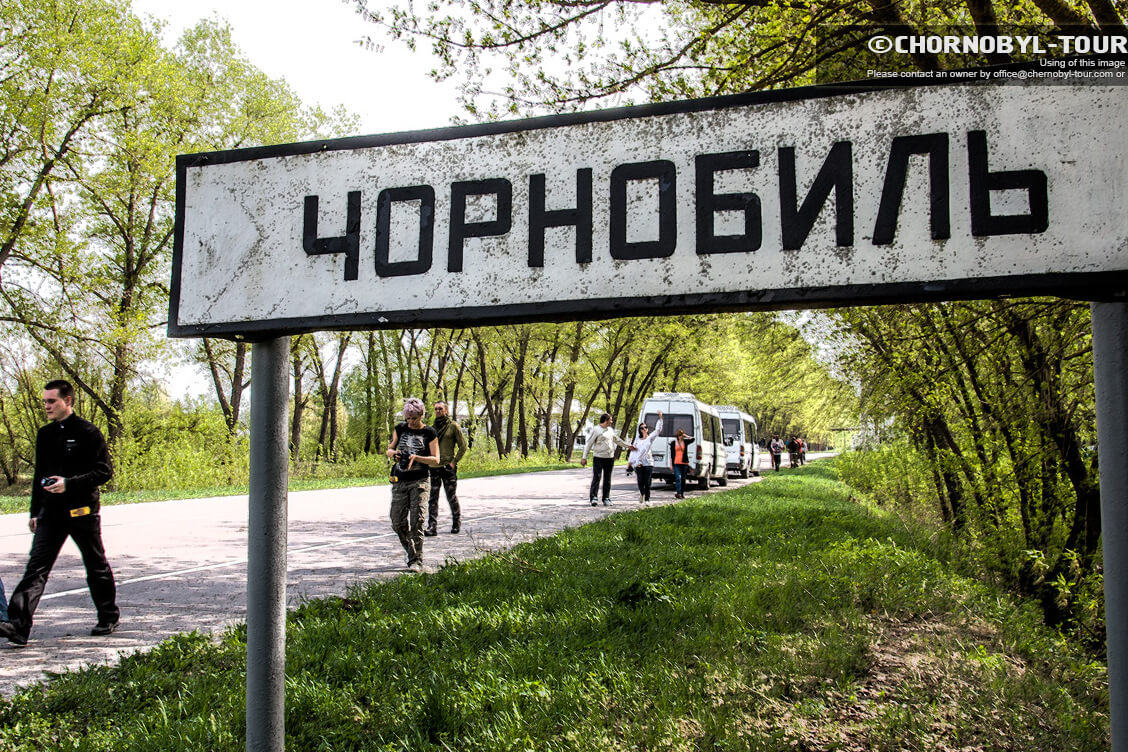
Altogether, this paints an unpleasant picture: nuclear disasters in the future are not just possible, they are likely. Just like some of the space missions ended up in disaster despite the sincere efforts of the brightest minds, just like airplane crashes happen despite the strict regulations and scrutiny, if we use nuclear power, there will be nuclear accidents. There is, however, a difference: an unfathomably greater scale of consequences that a nuclear catastrophe has. Chernobyl Yet to Come may easily be even worse than Chernobyl. The Chernobyl power plant was located in a region with a relatively low population density. The Chernobyl exclusion zone at some points spreads almost 70 kilometres away from the ruined reactor building; approximately 9 million people live within a radius of 75 kilometres of the Doel Nuclear Power Station in Belgium. And the Russian-built, dictator-operated, accident-prone Astraviec plant is just 40 kilometres away from Vilnius – an EU capital with almost a million inhabitants. What if disaster strikes at a location like this?
But even if you are sufficiently far so as not to be among those killed immediately, or to be one of the millions that have to abandon their homes forever, your life would still change drastically. Even if you are on the other side of the Earth, from that moment onward you would know, that there is a chance that radioactive isotopes spread by the disaster have made it into your home. Or into the walls of your home. Or into your furniture. Or into the river nearby. Or onto your restaurant table. Even if you are lucky and none of that happens, wouldn’t the thought that it can happen take a heavy toll on your mental health? Is all of this an acceptable price for nuclear power? Is a single additional nuclear disaster acceptable?
Now, having heard from the spirits, you can start pondering what kind of energy source you would prefer to become dominant. Just remember: just like the nuclear history, nuclear-powered future looks bright and blue.
This is an opinion essay. The views of the author are not necessarily shared by Pozirk’s editorial team.