The material is available only to
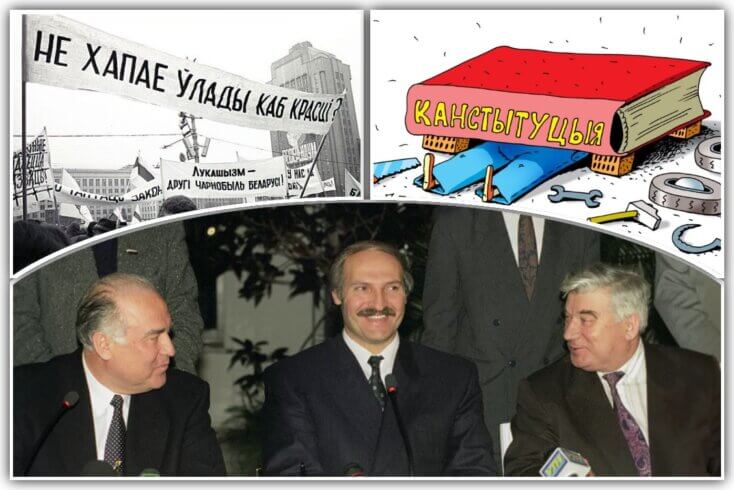
POZIRK+Lies and brutal force: How Łukašenka dismantled Belarusian democracy 30 years ago
The material is available only to
POZIRK+
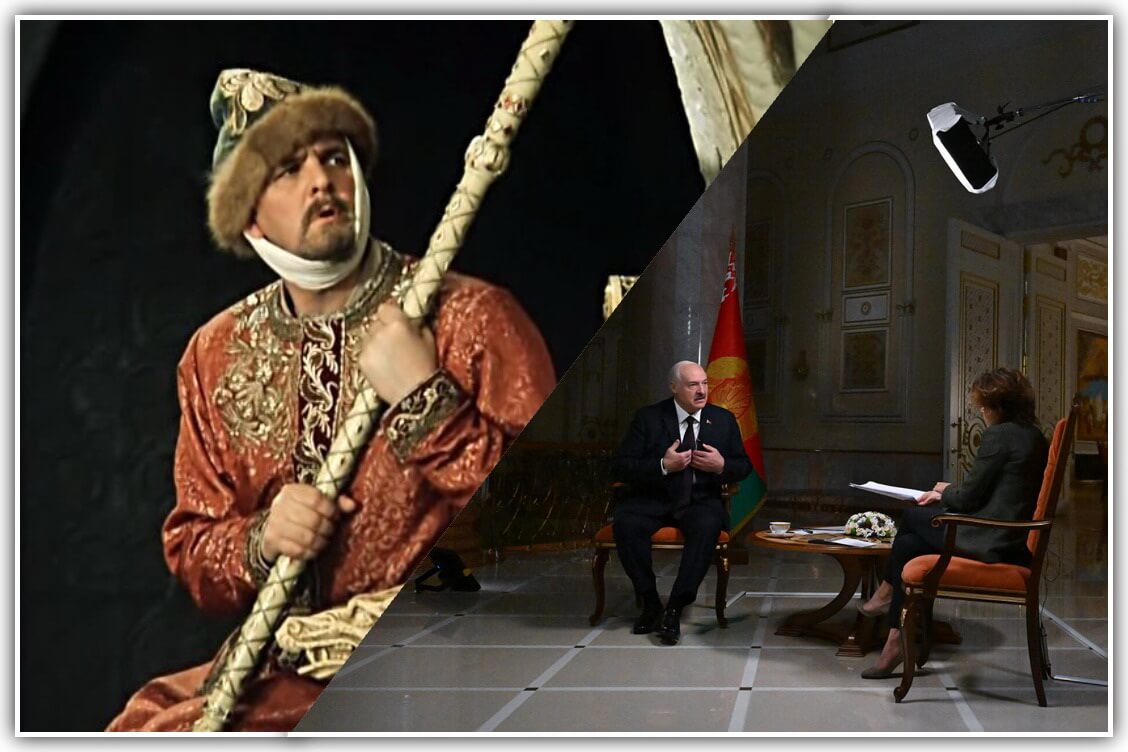
“I believe that God played the main role in my becoming president,” Alaksandar Łukašenka said in an interview with France’s Le Point. It was not the first time he had portrayed himself as someone anointed by God. He is trying to promote the idea that God gives and takes away power, and that ordinary people cannot decide who rules the country, either through elections or mass protests.
As far back as December 1994, shortly after winning the presidential election, Łukašenka told elected officials in Brest: “This president has come seriously and for a long haul [is here to stay]! Remember that people say power comes from God. You should respect God.”
In October 2009, he told Russian journalists about the ravaged country he had taken over, likening himself to Jesus carrying his cross: “And in this period God throws me, a 38-year-old boy, to this Golgotha.”
In October 2012, in an interview with The Independent, he said: “I will be in power as long as God and the Belarusian people permit, depending on my health and my wish.”
In February 2022, he told Russian TV presenter Vladimir Solovyev, who asked, “Is God today a Belarusian?”: “Not only today. He threw me on this pan in the mid-1990s and he is helping me from time to time.”
It was an unfortunate metaphor. In popular folklore, demons, not God, are the ones who fry people in pans in hell.
Russian President Vladimir Putin, whom Łukašenka calls his older brother, has never said so bluntly that he was chosen by God, but he has claimed that God chose Russia for a special mission.
He even invoked God to justify Russia’s invasion of Ukraine when presenting awards to military officers in February 2025: “It was destined, it was God’s will, if I can say so: we have such a complicated but honorable mission on our shoulders to defend Russia.”
People in his entourage go further and say so directly. For instance, Patriarch Kirill said in a birthday message to Putin in October 2022: “God installed you in power so that you can do service of special importance and great responsibility for the destiny of the country and the people entrusted to you.”
This reflects an old imperial tradition of portraying the tsar as God’s anointed ruler. The Russian Empire’s Fundamental Laws stated: “The Emperor of All Russia is a Monarch Sovereign and Unrestricted. God Himself commands obedience to his supreme power not only out of fear but also consciously.”
Łukašenka is simply copying Russia’s concept of sacred autocracy.
More broadly, the idea of rulers being appointed or favored by gods dates back to the ancient Egyptian pharaohs and the rulers of Mesopotamia and ancient Israel. The doctrine serves to legitimize unlimited power and portray resistance to it as blasphemy and rebellion against God.
Centuries have passed, and people have invented democracy. Even authoritarian countries hold elections, but dictators like Łukašenka and Putin turn them into a farce. Both use elections as a ritual to extend their rule.
They pretend to respect democratic formalities while sending the people a clear message: they are insignificant subjects who must keep quiet and endure their rulers because those rulers are God’s chosen ones.
Łukašenka’s habit of sacralizing his power does not stem from religious conviction. He has admitted that he is an atheist or, as he put it, an “Orthodox atheist.”
This sacralization serves a practical purpose: it helps him justify clinging to power by any means, fair or foul. The longer he rules, the more he relies on violence to stay in power.
He blatantly rigged the 2020 election and used brutal force to suppress mass protests. He continues to rely on repression.
Asked by a Le Point journalist why there was no opposition in the country, he claimed: “How come there is no opposition? We have opposition that has its opinion today. There were five presidential candidates at the most recent election.”
He was referring to the January 2025 election ritual, when the authorities put five names on the ballot, including four figurehead candidates, to simulate a popular vote.
One of the candidates, Siarhiej Syrankoŭ of the pro-Łukašenka Communist Party, publicly declared that the incumbent’s victory was inevitable and that his party supported him.
It was a pathetic performance by a group of courtier-like candidates playing their parts under the direction of the God-chosen Łukašenka.
Despite claiming that he is not clinging to power with “bluish fingers,” Łukašenka is likely to remain in office as long as his health permits.
“Forget about power transition,” he told Le Point. He seems determined to avoid the uncomfortable thought that everyone dies and that his rule will eventually come to an end.
“I don’t yet intend to leave the president’s post tomorrow. No, no such intention for tomorrow. And later [it will be] as God wills,” he said.
But no matter how often he appeals to God, God does not make rulers immortal.
Łukašenka’s final act in office could resemble the end of Josef Stalin, who was found unconscious on the floor on March 2, 1953, after suffering a brain hemorrhage. Some accounts suggest that his colleagues were slow to call a doctor. Instead of a smooth transition, a bitter struggle for power followed.
Even if Łukašenka chooses a successor and draws up a plan for a smooth transition, the real power players may not follow his instructions after his departure. Moscow, above all, could seize the opportunity to bring Belarus under its control.
It should be stressed that, unlike Russia, Belarus has no tradition of blind worship of a God-anointed tsar. Hundreds of thousands of Belarusians took to the streets to protest against the self-proclaimed chosen one in 2020. That was unlikely to be their last battle for freedom.